


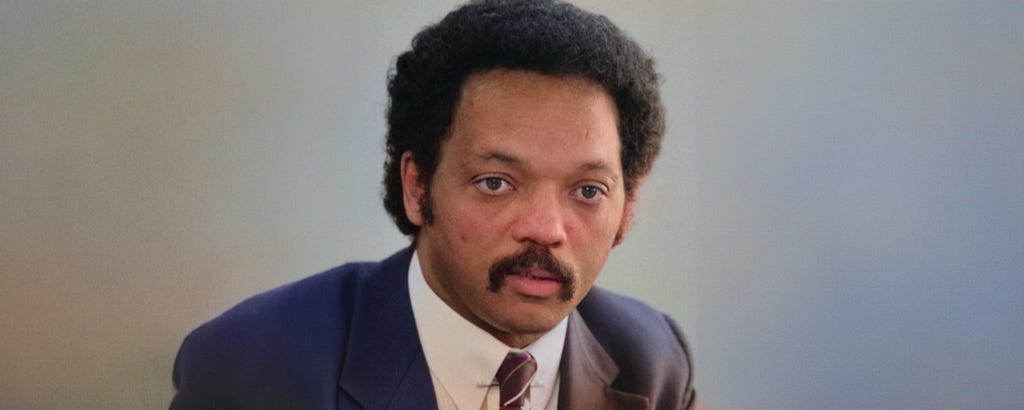
Washington Post personal finance columnist, Michelle Singletary, tells the moving story of how a visit to her grade school by the Reverend Jesse Jackson inspired her life and career as described in her column, “How the Rev. Jesse Jackson Taught Me to Keep Hope Alive." Then Ralph welcomes Professor Eric S. Fish from U.C Davis School of Law to explain how grand juries are no longer rubber-stamping frivolous cases brought to them by the Trump Administration. Plus, Ralph gives us his take on Trump’s marathon State of the Union speech and the Democratic response.


Michelle Singletary writes the nationally-syndicated personal finance column “The Color of Money,” which appears in the Washington Post on Wednesdays and Sundays. In 2021, she won the Gerald Loeb award for commentary. She has written four personal finance books, including, What to Do With Your Money When Crisis Hits: A Survival Guide and The 21-Day Financial Fast: Your Path to Financial Peace and Freedom.
The Trump administration’s destruction of diversity, equity, and inclusion—they misunderstand what that means. It doesn’t mean that you’re giving jobs to people who are unqualified. It means that you recognize that the playing field wasn’t even, and let’s even this playing field. I liken it to a football team. You can’t have a football team of all quarterbacks and win. You have to have a quarterback, a running back, a linebacker, you have to have a good kicker. It’s the same thing—your team has to encompass people that represent all kinds of abilities to have a winning team. So DEI isn’t a giveaway. It isn’t charity. It recognizes that when you have people from different backgrounds and different perspectives and different skill levels, you have a winning team.
Michelle Singletary

Eric S Fish is professor of law at the UC Davis School of Law. Professor Fish’s primary research is in criminal law, with particular focus on the ethical duties of participants in the criminal process, the structure of immigration crimes, and the system’s emphasis on administrative efficiency. He has also served as a public defender, first with the San Francisco Public Defender’s Office, and later as a Federal Defender in San Diego.
This has been a really remarkable series of rejections of the Trump administration’s prosecutions by ordinary people serving on grand juries, and one that is largely unprecedented in modern American history. I can’t think of another example of grand juries rejecting such high-profile cases (and so many of them). Nothing really comes to mind. So in a certain sense, one might say this is the grand jury’s original purpose…Initially they were a democratic institution of governance. They were a local check on the colonial oppression of the British (at least in the early colonial period). They refused to indict prosecutions under the Stamp Act, under the revenue laws. They were a tool of anti-colonial resistance to British oppression, and this seems at least broadly analogous to that—local grand juries in places like Minnesota, Chicago, Washington, D.C. are rejecting the Trump administration’s attempts to prosecute its political enemies and bring trumped-up charges against protesters.
Eric S. Fish
All in all, [the State of the Union address] was fodder for political scientists for years to come. A dictatorial serial law violator, self-enriching chronic liar, cruel, vicious to vulnerable people and people without power (which is a majority of the people) elected dictator. This speech—which went for one hour and 48 minutes, the longest State of the Union speech ever—will be analyzed for a long time with the question at the center of the analysis being: How could so many tens of millions of voters be taken in by Trump’s mouth, his lies, his false statements, his fantasies, his fake promises, his lack of any kind of record, whether as a businessman where he used bankruptcies as a strategy…and his record as a politician in his first term? That’s the question we have to ask ourselves. And it’s too easy to say that the Trump voters couldn’t stand the Democrats who abandoned them. That’s not enough. They could have not voted for Trump. They could have written in a vote. They could have voted for the Green, Libertarian, or other minor parties. They can’t use the Democrats as a 100% excuse for voting for Trump. And a lot of them didn’t. They just liked Trump. They liked his prejudices. They liked his lies. They liked his fantasies. They liked his fake promises.
Ralph Nader
News 2/27/26
Our top stories this week come to us from our southern neighbor, Mexico. First, on February 22nd, Mexican authorities announced they had successfully conducted an operation resulting in the death of Nemesio Rubén Oseguera Cervantes, aka “El Mencho,” who headed the powerful Jalisco New Generation Cartel (CJNG). In retaliation, the cartels launched a wave of violence throughout the country. Bafflingly, given the obvious enmity between the cartels and the government of Claudia Sheinbaum, Elon Musk implied that Sheinbaum is in the pocket of the very drug cartels with whom she is practically at war. Reuters reports Musk “responded to a 2025 video of Sheinbaum discussing cartel violence and alleged that she was ‘saying what her cartel bosses tell her to say.” Reuters notes that Musk did not provide further evidence. In fact, much of the strength of the Mexican cartels would actually be more accurately attributed to the United States. As USA Today writes, Mexican officials recovered a rocket-propelled grenade launcher, 10 long arm [rifles], handguns, and grenades, from El Mencho’s weapons stockpile. Mexican Defense Minister, Ricardo Trevilla Trejo estimated that about 80% of the recovered weapons were purchased in the United States and smuggled into Mexico. This represents just the tip of the iceberg of the so-called “iron river” of firearms flooding Mexico’s black market from the U.S. As opposed to the lax gun laws in the states, gun ownership in Mexico is “tightly restricted…[and] There is only one military-run gun store in the country.”
Meanwhile, President Sheinbaum is bucking American pressure by continuing to send humanitarian aid to the tiny, embattled island nation of Cuba. AP reports that last week, “Two Mexican Navy ships laden with humanitarian aid docked in Cuba…two weeks after…President Donald Trump threatened to impose tariffs on countries that sell oil to the island.” These ships carried 800 tons worth of bundles of “Made in Mexico” goods, including rice, beans, amaranth and crackers — complemented by a bottle of oil, large cans of sardines and canned peaches. Another 1,500 tons of powdered milk and beans are expected to be sent to Cuba in the coming days. The U.S. has taken a more bellicose line with Cuba than it has in quite some time, even taking naval action in the waters surrounding the island, making Mexico’s support that much more critical.
In another Cuba story, a diplomatic incident is unfolding this week regarding a Florida-registered speedboat. According to the island’s government, the boat, carrying 10 passengers, entered Cuban territorial waters and opened fire on Cuban soldiers. The Cubans responded in kind, killing four people aboard the craft and wounding six others. According to the Cuban authorities, most of the passengers “have a known history of criminal and violent activity.” These include Amijail Sánchez González and Leordan Enrique Cruz Gómez, both wanted by Cuban authorities based on their involvement in “the promotion, planning, organization, financing, support or commission of…acts of terrorism.” The Cubans also claim to have arrested one Duniel Hernández Santos, who was supposedly “sent from the United States to guarantee the reception of the armed infiltration.” They claim Hernández Santos has confessed. American authorities have so far evinced confusion more than anything else, with Secretary of State Marco Rubio saying “We’re going to figure out exactly what happened.” This from AP.
Whatever cloak and dagger games the administration may be playing in the Caribbean, they have been pointedly unsubtle about their saber rattling regarding Iran – and the reaction from Congress has been meager. While anti-war members in the House and Senate are pushing war powers resolutions, namely Representatives Ro Khanna and Thomas Massie along with Senator Tim Kaine, not even the nominal opposition party is supporting these efforts. According to Capital & Empire, Democrats are seeking to “dampen momentum” and even “prevent the Iran war powers vote from advancing.” Democrats Josh Gottheimer and Jared Moskowitz, both arch Iran hawks, have publicly stated they will not back the war powers resolution, and many others have sought to split the difference, saying Trump should only move on Iran after consulting with Congress. As the Hill notes, the Senate did pass a war powers resolution restricting the president’s use of military force against Iran without congressional approval during Trump’s first term, with eight Senate Republicans backing the Democrats in support of the bill. It is hard to imagine such a bipartisan show of force this time around.
In more disappointing congressional news, on Tuesday the House voted down the bipartisan ROTOR Act, which would have beefed up aviation safety standards, NPR reports. This bill was drafted in the wake of the deadly midair collision over Washington D.C. last year. This bill, principally authored by Senator Ted Cruz, who chairs the Senate Commerce Committee which oversees transportation, would have required wider use of Automatic Dependent Surveillance–Broadcast – safety technology designed to transmit an aircraft’s location to other aircraft. The Senate unanimously passed the bill in December, with the support of the Defense Department – now styling itself the Department of War – but the Pentagon yanked its support just before the House vote, citing “unresolved budgetary burdens and operational security risks.” The final House vote was 264 in favor and 133 opposed, 132 Republicans and Democrat Lizzie Fletcher of Texas. Despite the lopsided majority in favor, the bill needed a two-thirds vote to pass and was therefore defeated by the minority.
In another aviation related story, FBI Director Kash Patel is embroiled in a new scandal based on his alleged misuse of the FBI’s Gulfstream jets for personal travel. CNN reports Patel’s frequent jetsetting has even caused delays or issues in high-profile investigations, such as the assassination of rightwing commentator Charlie Kirk and the Brown University shooting last December. According to a letter authored by Senator Dick Durbin, Patel’s incessant misuse of the official FBI planes for personal travel “has even frustrated White House and DOJ senior staff.” This story hits particularly hard at the present moment, with images of Patel chugging beer in the locker room celebration of the Olympic men’s hockey team going viral. The FBI then had to spend days running cover for Patel, claiming the director was in Italy for “long-planned official business,” which just happened to coincide with the occasion.
Our next two stories concern AI. First, a new Public Citizen report documents how the AI industry is deploying a veritable army of lobbyists on Capitol Hill, absolutely dwarfing not only their opposition, but practically every other industry as well. According to this report, more than one quarter of all federal lobbyists are now lobbying on AI issues, representing a rise in lobbyist activity on AI issues of more than 265 percent over the past three years. This report finds the Chamber of Commerce hired the most AI lobbyists in 2025 at 91, followed by Microsoft at 63, Meta at 55, Intuit at 51, and Amazon at 48. This meteoric rise in AI lobbying activity is sure to give the industry massive firepower in the halls of Congress, ensuring a favorable regulatory environment for years to come. This will be particularly critical for data centers, which have faced a rash of local opposition. Per this report, that particular subset of the AI lobbying industry has expanded by a staggering 500 percent since 2023.
For all its newfound political clout however, the AI business seems to have found itself a formidable new opponent – Pope Leo XIV. This week, Pope Leo addressed priests from the Diocese of Rome and implored them to resist “the temptation to prepare homilies with Artificial Intelligence.” The pontiff argued “Like all the muscles in the body, if we do not use them, if we do not move them, they die. The brain needs to be used, so our intelligence must also be exercised a little so as not to lose this capacity.” He added that “to give a true homily is to share faith,” and that AI “will never be able to share faith.” This from Vatican News.
Turning to media news, this week, Paramount submitted a new offer to purchase Warner Bros. Discovery. According to the Hollywood Reporter, Paramount’s new bid amounted to $31 per share and, following a period of consultation with the Warner board of directors, this offer was deemed “superior” to the proposed deal with rival bidder Netflix. This triggered a clause in the Netflix merger agreement giving the streamer four days to submit a new, superior offer. However, that same day Netflix issued a statement officially declining to submit a new, higher offer, with representatives writing “the price required to match Paramount Skydance’s latest offer,” means “the deal is no longer financially attractive.” With Netflix out of the way, Paramount, led by Trump-aligned billionaire scion David Ellison, will now proceed with their acquisition of Warner Bros., including their prodigious intellectual property back catalogue and the cable news titan, CNN. A friendly relationship with the Trump administration means regulators are unlikely to hold up this deal. The Ellisons have already acquired CBS News, installing Bari Weiss as “editor-in-chief.” It seems likely they will follow a similar playbook regarding CNN.
Our final stories this week concern the continuing fallout of the Epstein scandal. This week saw the arrest of former British-U.S. ambassador Peter Mandelson, joining Andrew Mountbatten-Windsor (formerly Prince Andrew) in the collection of high profile British individuals arrested in connection with the Epstein scandal. Meanwhile, at Harvard, former University President Larry Summers will resign from his academic and faculty appointments, including his University Professorship, at the Ivy League school following the conclusion of this academic year. Until then, he will remain on leave, per the Crimson. Summers regularly exchanged messages with Jeffrey Epstein about topics ranging from women, to politics, to Harvard-related matters as late as July 2019, the day before Epstein’s final arrest. But the most noteworthy Epstein-related news this week came from Chappaqua, New York. On Thursday and Friday, Bill and Hillary Clinton testified about their relationships with the late financier and sexual predator. After much wrangling, these potential blockbuster hearings were held behind closed doors on the Clintons’ home turf. What exactly was said remains shrouded in mystery. According to the BBC, House Oversight Committee Chair James Comer said he hopes to make videos of both Hillary and Bill Clinton’s depositions publicly available soon. Robert Garcia, the Democratic Ranking Member on the committee, said a “new precedent” had been set by calling a former president to testify and demanded that Trump be called to testify before the committee next. We shall watch this space.
This has been Francesco DeSantis, with In Case You Haven’t Heard.


