


Ralph speaks to America's #1 Populist Jim Hightower to get the lowdown on some potentially historic races coming up in Texas. Then Ralph is joined by Norman Solomon (co-founder of RootsAction) to get his final take on how this round of Democratic campaigns have played out. Finally, Ralph talks to pollster John Zogby about what we can learn from the latest polls.


Jim Hightower is a syndicated columnist, national radio commentator, and America’s Number One populist. He is a board member of Public Citizen, and he is a founding member of Our Revolution, an organization inspired by the issues brought up in the Bernie Sanders campaign. He has written several books including Swim Against the Current: Even a Dead Fish Can Go With The Flow, and his newsletter The Hightower Lowdown publishes twice a week on Substack.
Even the current [Texas] Agriculture Commissioner (who Republicans abandoned, even though he is a right-wing Republican himself) has effectively endorsed Clayton Tucker for that position. And one reason, the main reason, is because Clayton took on early the data center corruption in our state. Where our state government under Abbott got fully behind the building of data centers and the coming AI revolution, saying that we were going to be the centerpiece in the world of data centers. And it turns out that, oops, that’s not a very popular position among Republicans in rural areas of our state, because, of course, they’re going to suck up the water, they’re going to take over the land, take over the local government, etc. And people aren’t real keen on that. So there’s been a rebellion building in the countryside. And I’ve got to say, the Democratic Party did not understand that rebellion and did not adopt it early. But Clayton Tucker did.
Jim Hightower
People are finally catching on, getting fed up, and not just getting mad, but doing something about it.
Jim Hightower

Norman Solomon is co-founder of RootsAction.org and executive director of the Institute for Public Accuracy. He is the author of War Made Easy, Made Love, Got War, and War Made Invisible: How America Hides the Human Toll of Its Military Machine.
“Tone deaf” from Schumer and Jeffries is part of what they assume to be their job description.
Norman Solomon
All too often, people are overly respectful. Sure, you don’t want to go around screaming at your representatives. But the amount of deference, the amount of kowtowing and, “Oh, thank you for all you’ve done. Appreciate it,” it gets translated to, “Well, you’re not a Republican, so thank you very much. You’ve done your job.” No, that’s not your only job. Your job is to represent people against corporate power, against the militarists, against the vicious economic and social system that is crushing millions and millions of people.
Norman Solomon
Wherever you live, if you have somebody in Congress, don’t treat them like a god. Forget about No Kings—don’t treat them like a prince or anything else. They’re there to work for you. And the vast majority of the members of Congress (and that includes Democrats), they haven’t been working for you. They’ve been working for military contractors. They’ve been working for the Fortune 500 and Big Tech. And that has to change. And will change only if we confront them.
Norman Solomon
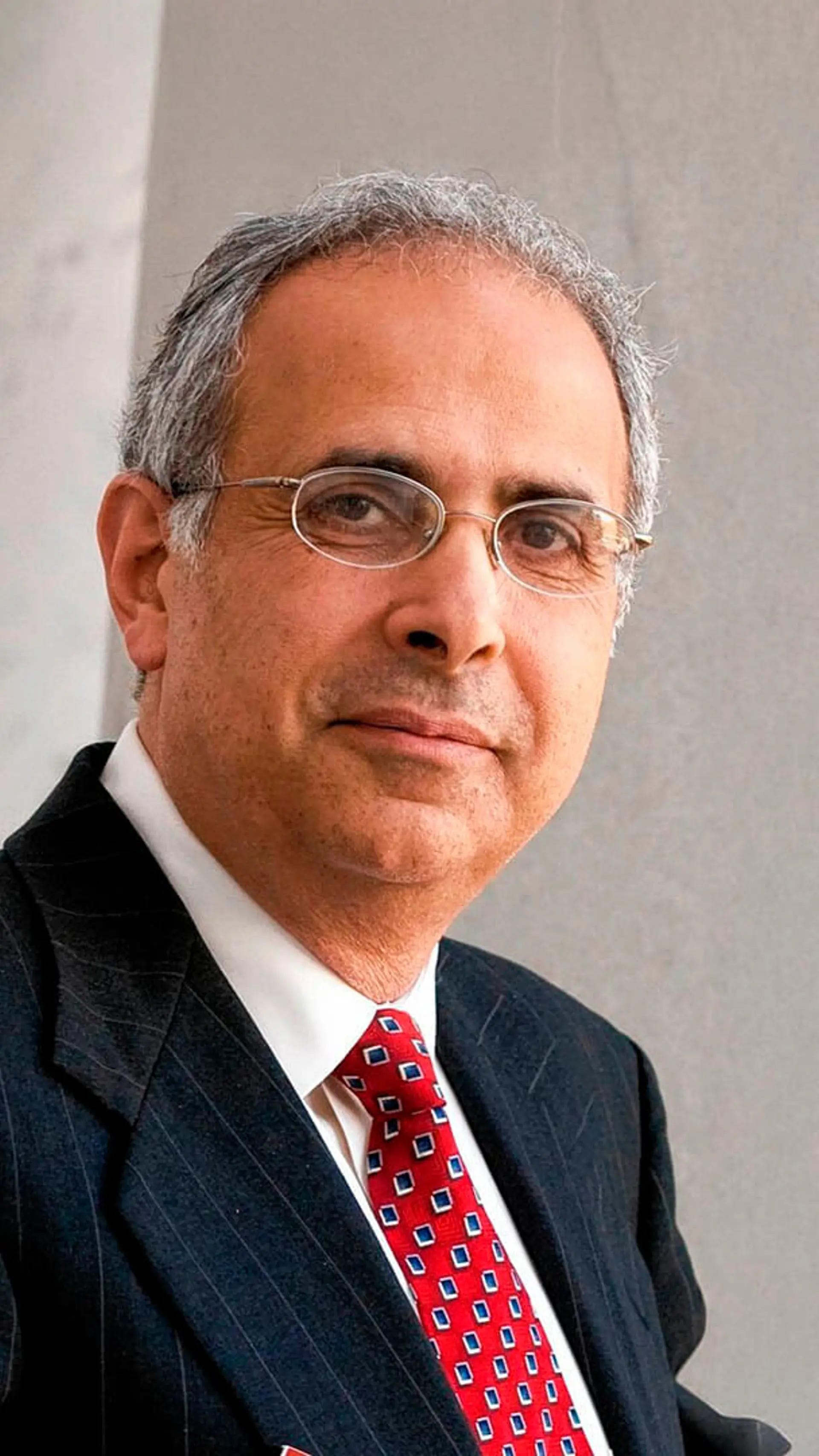
John Zogby is a public opinion pollster, author, and public speaker. He is the founder of the Zogby poll and the Zogby International poll, and he is founder and Senior Partner at John Zogby Strategies, a consumer opinion survey and political survey company.
I’m a little less worried this time around, simply because the Republicans own what’s going on. They can’t blame the Democrats for the lack of affordability, for status anxiety…They own the war in Iran…These are things that they have to defend. In the absence of defending, they blame Democrats for being socialists or blame Democrats for personal foibles. And that may work with some. But the fact of the matter is, what voters really want to know is: What have you done for me lately, and what are you going to do for me next? And they’re not hearing that from Republicans. Now, they’re not necessarily hearing a united message from Democrats either. But the Democrats, at least this time, don’t own the mess.
John Zogby

News 10/30/26
Our top story this week is the shock re-election victory of Brazilian President Luiz Inácio Lula da Silva. Lula, who began his career as a labor leader and dissident under the Brazilian dictatorship, now becomes perhaps the most voted-for individual in the history of the world. Lula placed second in the first round of the presidential election, with his opponent Flávio Bolsonaro coming in first, which makes the reversal in the second round that much more impressive. According to PBS, voting was extended by two hours just minutes before the polls were set to close following requests from both campaigns, with Lula citing “issues with buses that provide transportation to polls in Sao Paulo and Salvador,” and Bolsonaro citing “heavy rains in Brazil’s south.” One major theme of his campaign was that a victory for Flávio Bolsonaro, son of former President Jair Bolsonaro, would undermine Brazilian sovereignty and give the Trump administration carte blanche to do as they please in the country. This has been a recent pattern in Latin America, borne out by right-wing governments in Argentina, El Salvador, Ecuador, Colombia, Chile and Peru, compounded by the administration’s aggressive approach to more left-wing governments as in Cuba and Venezuela. Flávio’s actions in the wake of his loss – fleeing to Miami under the protection of the U.S. government after defying a Brazilian Supreme Court order to surrender his passports and stand trial in a sprawling money laundering investigation and declaring himself the rightful president-elect of Brazil in exile – does little to refute this narrative. However, despite Lula’s victory his next, and likely final, term is expected to mostly consist of rearguard actions as the new Congress will be dominated by the extreme right, including two newly elected senators from the Bolsonaro clan.
Elections were also held in Israel this week, but appear to have resulted in a hung parliament. As of this writing, the Likud bloc, led by incumbent Prime Minister Benjamin Netanyahu appears to have won 53 seats, while the opposition bloc won 48 seats, leaving neither bloc with a governing majority of 61 seats. The swing bloc consists of the Arab parties, which are claiming 19 seats in an unprecedented electoral showing. However, neither side has so far proven willing to ally themselves with the Arab parties, a strict taboo in Israeli parliamentary politics. Netanyahu himself has “dismissed the idea of partnering with Arab parties as treasonous,” according to AP. Al Jazeera reports Netanyahu is claiming that the Arab parties stole the election via “serious criminal offences” including “bribery, threats, violence, [and] forgery,” echoing Donald Trump’s oft-repeated claims about Democrats in the 2020 election. Sami Abu Shehadeh, the leader of Balad, a left-wing Arab-Israeli party, is quoted saying “When someone who is a candidate to be a prime minister says he does not want to sit with 20 percent of the population…this is racism, and racism is ugly, whether its victims are Jewish or the victims are Arabs.” Over 400,000 ballots remain to be counted by Israeli citizens who are “unable to leave their posts, such as nurses, diplomats or soldiers. They are tallied separately to ensure each voter has not already cast a ballot elsewhere.” Isaac Herzog, who serves in the largely ceremonial role of President of Israel, is urging the factions to form a government as soon as possible, adding that “We need to do everything…not to hold another election.”
Meanwhile, in China, Reuters reports the AI speculative bubble seems to have burst. This piece states that the “mainland STAR50 index of AI and semiconductor leaders,” fell by “40%...vaporising some $480 billion in market value.” While this report contends that there was no obvious selling trigger, “high prices, tax bills and the threat of the US or other nations banning Chinese equipment in data centres all contributed,” to the mass sell-off. The collapse of Chinese AI stocks is more pronounced than elsewhere because the Chinese stock market was overreliant on them. Goldman Sachs estimated that AI stocks comprised “42% of China’s market capitalisation and 57% of turnover across mainland-listed A-shares and Hong Kong’s H-shares.” AI stocks in the United States, meanwhile, slid by around 6%. Wang Zhuo, partner at Shanghai Zhuozhu Investment Management is quoted saying that the bust was always bound to happen because “all…Chinese…chipmakers and AI suppliers…eventually end up in a price war…There’s no exception…All bubbles inevitably burst.”
Our final story from abroad, published in Vanity Fair, takes us back in time to 2020. This piece, which is in fact an excerpt from the forthcoming book Princes and Thieves: Jared Kushner and Mohamed bin Zayed’s Secret Plot to Remake the Middle East, details how Dutch intelligence, utilizing a Russian GRU asset, accessed the iPhone of then-President Trump’s son-in-law and Senior Advisor, Jared Kushner. The following story is positively Byzantine, but the core of it is that Kushner seems to have been receiving large sums of money from – and possibly doing the bidding of – UAE President Mohamed bin Zayed or MBZ and Saudi Crown Prince Mohammed bin Salman (MBS). The biggest bombshell noted in the book so far, as reported by the New Republic, is that “Kushner was allegedly paid $50 million by a foreign government to get former Secretary of State Rex Tillerson fired.” The release of the full book is highly anticipated and is likely to include many more details of the astonishing and nigh blatant corruption of the first Trump administration, which itself now appears quaint in comparison to the second.
Turning to domestic political news, this week the Democrats of the House Judiciary Committee released a new report on Trump’s ties to Jeffrey Epstein. According to NBC, the report accuses the Justice Department of “obstructing investigations into potential Epstein conspirators, including…Trump,” and concludes that “an independent special counsel is necessary,” because there is “more than sufficient evidence to launch a criminal investigation.” In a statement, Congressman Jamie Raskin, who is poised to chair the committee if Democrats retake the chamber, said “The women who survived Epstein deserve to be heard, Congress must have the complete files required by law, and an independent special counsel must investigate Epstein’s co-conspirators and DOJ’s cover-up and ensure that state and foreign prosecutors have the evidence they need to pursue justice.” Many see in this move a preview of what the next two years may look like if Democrats retake the House and/or Senate – relentless investigations of President Trump targeting his biggest political vulnerabilities. However, it is unclear what the terminus of these investigations will ultimately be, given the party’s reticence to pursue impeachment.
Speaking of big donor influence, Elon Musk continues to dump gargantuan sums of money into the American political system. With his latest infusion of $158 million into the flailing senate campaign of Texas Attorney General Ken Paxton, as reported by the Wall Street Journal, the trillionaire’s political giving to Republicans in 2026 has nearly reached the $450 million mark. This from the Washington Post-compiled list of the biggest donors in 2026. More striking, if one combines that figure with the nearly $300 million the tech robber baron spent to elect Donald Trump and GOP candidates in 2024, along with an additional $50 million here and $10 million there, Musk’s sum total spent on electoral campaigns sits around $760 million. To give some indication of just how unprecedented this degree of spending is, a chart shows how Musk’s political spending has surpassed the lifetime total of George Soros by over $100 million despite the fact that Musk only began his large-scale political spending campaign in 2024.
In Texas, Musk’s money is paying dividends. This week, Bloomberg Law published a report on a fascinating case in the Lone Star State, where a judge has ruled that sitting Republican Governor Greg Abbott must allow Gina Hinojosa, his Democratic opponent, to “review more than a thousand pages of unredacted communications” between the Governor and Mr. Musk. Hinojosa is suing in her capacity as a state legislator representing Austin, arguing that she wants to see whether Abbott and Musk have been discussing “tax breaks, grants, and Musk’s interest in data centers and a public beach near SpaceX’s launch site.” This piece notes that Abbott has assiduously courted Musk and his businesses to the state, leading the tech magnate to situate many of his corporate entities in Texas, including SpaceX, Starlink, Tesla, X, and the Boring Company. Hinojosa’s lawyer contends that by blocking these communications, Abbott is “preventing her from doing her job.” Bloomberg notes that “Texas lawmakers are entitled to review public records that are excepted from public disclosure to prepare potential legislation.” Unsurprisingly, Abbott and his lawyers are appealing the ruling. Hinojosa is demanding to view the communications before election day, putting this case on an impossibly tight timetable. Musk has donated half a million dollars to keep Abbott in the Governor’s Mansion.
Elsewhere on the campaign trail, the Guardian reports two former South Carolina governors, Republican David Beasley and Democrat Jim Hodges, have endorsed the Democratic nominee for U.S. Senate in the Palmetto State, Dr. Annie Andrews. Andrews has run a shockingly competitive campaign in a state where Trump defeated Kamala Harris by nearly 18 points. In their joint statement endorsing Andrews, the former governors said “This country is too divided, and the political rhetoric has gotten way, way out of hand…That’s why we’re coming together to support Annie Andrews.” Beasley has recently turned vocally critical of President Trump, writing in an op-ed that “What has happened in the Republican Party today is just heartbreaking,” adding that it is “not the party that I knew, and it is not the party that I consider myself a member of.” The Guardian notes that this is just the latest case of Republicans crossing the aisle to endorse Democratic candidates this cycle. Most prominently two former Republican governors, Bill Graves and Mike Hayden, endorsed Democratic Senate candidate Adam Hamilton in Kansas and in Texas, James Talarico, has received endorsements from over 20 Republican leaders, but even beyond these high-profile races, Republicans have endorsed Democrats in Georgia, Montana, Florida, Virginia, Illinois and South Dakota.
Perhaps an even more extreme example of Republicans scrambling to cross the aisle to endorse Democratic candidates is unfolding in Alaska. In a joint op-ed published in the Anchorage Daily News three former governors of the state – Democrat Tony Knowles, Republican Frank Murkowski and independent Bill Walker – all endorsed Democratic gubernatorial nominee Jonathan Kreiss-Tompkins. The trio writes that while they “come from different political backgrounds, have different perspectives and have not always agreed on issues facing our state,” they “share a deep commitment to Alaska and its future.” They argue that Kreiss-Tompkins, known by his initialism JKT, has “not just expressed a willingness to bring Alaskans together but has demonstrated a record of doing just that,” and they express trust that he will follow through on his legislative commitments, including “[reversing] the decline of public education…[protecting] our fisheries…[and reducing] healthcare costs.” No less impressive, Murkowski’s daughter, longtime Alaska Republican Senator Lisa Murkowski, has also endorsed JKT, Alaska Public Media reports. In her endorsement, Murkowski wrote that “Our future is too important to be hamstrung by partisan divisions…Jonathan understands that governing requires listening to people with different perspectives and finding common ground to solve the problems all of us face.”
Our final story for this week concerns a very specific Chicagoland voter in this year’s midterms: Pope Leo XIV. According to the Chicago Sun-Times, the Pontiff is “still a registered voter in Illinois and requested a mail ballot for the midterm elections.” Matt Dietrich, spokesman for the Illinois State Board of Elections is quoted saying that “There is no such thing as an absentee ballot in Illinois law anymore. So anyone can vote by mail if they so choose,” adding that American citizens overseas can alternatively vote under the “Uniformed and Overseas Citizens Absentee Voting Act,” or UOCAVA, though that law is mostly utilized by the military. The first Pope hailing from the United States has publicly clashed with President Trump, particularly over the administration’s hawkish foreign policy and aggressive internal immigration enforcement, and said “I’m not afraid of the Trump administration or of speaking out loudly about the message of the Gospel, which is what the church works for.”
This has been Francesco DeSantis, with In Case You Haven’t Heard.


