


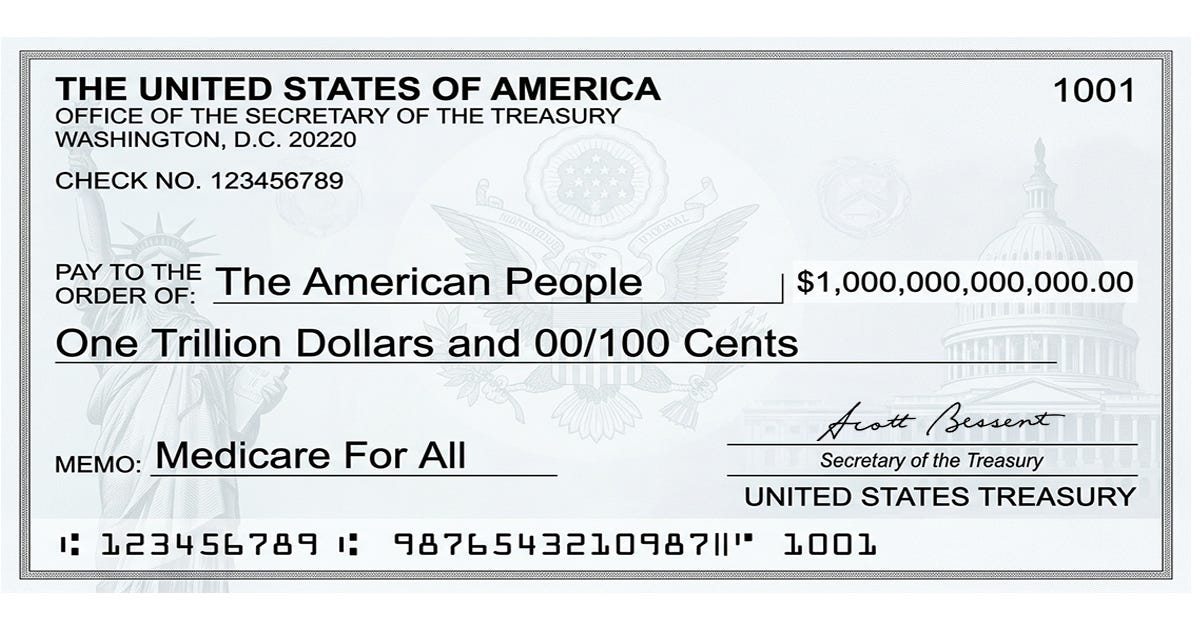
Ralph welcomes Dr. Alison Galvani, the founding director of the Yale Center for Infectious Disease Modeling and Analysis, and co-author of the forthcoming article, “Projected Economic Gains and Lives Saved Under Universal Health Care in the United States.” Then our constitutional law expert, Bruce Fein, stops by to tell us about a letter he and Ralph sent to states Attorneys General urging them to prosecute Donald Trump for exhorting his followers to commit voter fraud in the forthcoming midterm congressional elections. Finally, we respond to your feedback on how to be a smart voter.


Alison Galvani is the founding director of the Yale Center for Infectious Disease Modeling and Analysis and the Burnett and Stender Families Professor of Epidemiology at the Yale School of Public Health, Yale School of Medicine. She has applied her modelling and health economics skills to address public health challenges including HIV/AIDS, Zika, Ebola, influenza, and COVID-19. And she is co-author of the forthcoming article “Projected economic gains and lives saved under universal healthcare in the United States.”
We analyze the American healthcare system as a national balance sheet. And on one side of the ledger, we have: covering the uninsured and expanding care for the uninsured (that costs money). And we took into account that utilization will increase for people that currently have inadequate health care… And when we initially started looking at this in 2019…I anticipated a hefty price tag as well. Our work has focused on the effectiveness and cost-efficiency of public health policy in the US and around the world, and usually we’re asking: How much will it cost to save lives? And we rarely get a no-brainer where you save money and you’re saving lives.
Alison Galvani
Currently, no country spends more on health care than America (even though millions of Americans are completely uninsured and many more have inadequate insurance). And despite spending so much, we trail dozens of nations in life expectancy, infant survival, maternal mortality, and deaths that timely medical care should prevent. The prevailing issue is that even though we’re spending so much, a lot of the money we’re spending isn’t going to health care delivery itself. So much of it is extracted by for-profit insurance companies and directed away from care towards shareholders. There’s a misalignment of incentives—insurers make more profit when health care is denied. So, Americans are literally forfeiting their health so that corporate shareholders can make more money. And that’s just the architecture of our current health care system by having for-profit companies at so many junctures, even beyond the health care insurers.
Alison Galvani
People are dying not because their conditions couldn’t be prevented or treated, but because they couldn’t afford to see a doctor or fill their prescriptions. People without health insurance are more likely to die than insured people of the same age—that’s been empirically shown. So we took those empirical parameters and we applied that increased risk to the uninsured population in each age group, and then the difference between the deaths we have and the deaths we would be able to avert under universal health care coverage is more than 114,000 lives a year, we estimated. And last year’s Big Beautiful Bill, with its health care retractions, will only exacerbate the toll.
Alison Galvani
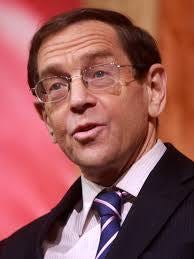
Bruce Fein is a Constitutional scholar and an expert on international law. Mr. Fein was Associate Deputy Attorney General under Ronald Reagan and he is the author of Constitutional Peril: The Life and Death Struggle for Our Constitution and Democracy, and American Empire: Before the Fall.
[The US Supreme Court] issued this very broad immunity theory that Presidents have immunity from criminal prosecution for discharging Constitutional responsibilities entrusted to the President. And this was way outside that scope because it relates to Mr. Trump’s activity as the head of the Republican Party, trying to promote results in Congressional campaigns. And to the extent there’s any federal role in Congressional campaigns, it’s entrusted to Congress, not the President…Trump should not be subject to any different standard than any citizen who would likewise make such a claim of fraud. I can guarantee you, if you had a Democrat stand up and say, “Democrats should take a pledge to commit fraud, vote even if you’re not registered,” there’d be a grand jury at the federal level summoned within 24 hours. And why should it be any different with Mr. Trump—by state attorneys general, who have the same authority and requirement to enforce state laws against fraud at the state level as the President does at the federal level?
Bruce Fein
Action Alert!
Call or write your state’s Attorney General about the following...
September 15, 2026
Connecticut Attorney General William Tong, President, National Association of Attorneys General (NAAG)
Re: State prosecutions of Donald Trump for inciting or aiding and abetting state electoral fraud in the midterm 2026 congressional elections
Dear Mr. Tong:
We urge every member of NAAG to consider state prosecution of President Donald Trump under their respective state laws for urging, in his non-presidential capacity, to commit voter fraud in the forthcoming midterm congressional elections. Speaking in his capacity as a leader of the Republican Party in Dallas, Texas, on September 10, 2026, unprotected by the constitutional immunity shield of Trump v. United States (July 1, 2024), Mr. Trump urged attendees to take a pledge as follows: “I don’t care if I’m registered or not. I’m going to try and cheat like hell, like they do.”
If an ordinary person uttered such an exhortation to industrial-scale electoral fraud, a state prosecution would be forthcoming. The United States abandoned “the King can do no wrong” doctrine of Great Britain 250 years ago on July 4, 1776.
We are eager to explore this idea further with NAAG.
Sincerely,
Bruce Fein, Esq. | Ralph Nader, Esq.

News 10/9/26
Our first stories this week concern the progressive campaigns underway in Michigan. In the Senate race, Abdul El-Sayed made headlines after he announced that he would be joined on the trail by former President Barack Obama. According to the Detroit Free Press, “President Obama will rally voters and encourage them to vote early for Democrats up and down the ballot,” in an event to be held October 24th. In addition to El-Sayed, Obama is expected to stump hard for Democratic Gubernatorial nominee Jocelyn Benson. At the same time, El-Sayed announced that he will also be joined on the campaign trail by New York progressive firebrands AOC and Zohran Mamdani, per the Washington Examiner. El-Sayed being able to bring together these factions of the fractious Democratic Party bodes well not only for his campaign but for his ability to govern effectively if he is ultimately elected to the Senate.
Meanwhile, in Michigan’s 7th Congressional District, incumbent Republican Congressman Tom Barrett faced off against his Democratic challenger, climate organizer William Lawrence, in the first debate of this race. Lawrence took the opportunity to tie Barrett to support for data centers and Trump’s tariffs – as well as Trump himself, who currently holds an approval rating of between 32% and 39% in Michigan, according to recent polling. On the issue of affordability, Lawrence argued that Barrett is “taking money from the corporations that are raising our costs and making our lives more challenging,” while Lawrence himself has “never taken a dime of corporate PAC money.” Barrett won this seat in 2024 by a margin of under 1%; this seat is considered a must-win for Democrats to retake the House. This from WLNS.
The first debate of the Senate campaign in Maine was held this week as well. CNN reports incumbent Senator Susan Collins “touted her ‘effective leadership’ securing federal funds for Maine, while [Democratic challenger Troy] Jackson sought to nationalize the race with persistent criticism of her relationship with Trump and 2018 vote to confirm Supreme Court Justice Brett Kavanaugh, who later voted to overturn the federal right to an abortion.” Collins refused to disavow her support of the Kavanaugh nomination, though she admitted that she “clearly doesn’t agree with how Brett Kavanaugh voted on Roe v. Wade,” per the Bangor Daily News. The most-watched moment of the night came when “Collins boasted that she has been the ‘most outspoken opponent of tariffs with Canada,’ noting she has won exemptions for products such as road salt.” Jackson retorted “what about everything else? We can’t eat road salt.” Collins has weathered extremely challenging political headwinds in the past, but many see the national conditions in this race as simply too much for her to overcome.
In other news, a nasty intra-party feud is roiling the Democratic Party in Brooklyn. At the center of the storm is Assemblywoman Rodneyse Bichotte Hermelyn, who became the first woman to lead the Brooklyn Democratic Party back in 2020. Since then, Bichotte Hermelyn has faced persistent criticism from progressive groups for operating the party as an old fashioned political machine. Following the June primaries, a gang of reformers calling themselves “Brooklyn Can’t Wait” won a controlling majority of seats on the party’s 42-member executive committee and sought to oust Bichotte Hermelyn. Instead, she retaliated by aggressively expanding the executive committee – adding 26 new seats and allocating those to loyalists. Facing enormous blowback from New York Democrats for this dictatorial move, Bichotte Hermelyn seemed to back down, announcing she would not seek re-election and declaring herself Chair Emeritus instead. However, legal battles over her actions continue to move their way through the courts. Last week, Bichotte Hermelyn and her allies suffered a major setback, when Supreme Court judge Lisa Lewis ruled that the legal head of the Brooklyn party was now powerful longtime Congresswoman Nydia Velázquez, while another court upheld the legal challenge on the rules fight thereby blocking the expansion of the executive committee. This from City and State NY. With all of that said, Bichotte Hermelyn and her clique organized yet another counterstrike over the weekend, convening via Zoom in the dead of night to elect Assemblywoman Nikki Lucas, a Bichotte Hermelyn ally, as party chair. Unsurprisingly, the reformers cried foul and are seeking a contempt-of-court ruling. We will surely continue to monitor this story closely.
In Washington, NBC4 reports Amazon will refund over $7 million to residents in the city’s Ward 7 and Ward 8, part of a settlement with the office of DC Attorney General Brian Schwalb. According to the lawsuit, Amazon “violated DC consumer protection law by secretly excluding two DC ZIP codes east of the Anacostia River from Amazon’s in-house, Amazon-branded delivery services — significantly slowing Prime deliveries to those areas — while continuing to charge tens of thousands of DC residents living there the full Prime subscription price.” Amazon denies any wrongdoing, with a spokesman maintaining that “In the zip codes at issue, drivers faced specific, documented safety threats, and we adjusted operations to protect them, while still supporting delivery through other carriers.” This settlement will apply to just under 70,000 residents of the District of Columbia. In addition to the refunds, Amazon will pay $1 million in penalties.
On the other side of Washington, this week the International Alliance of Theatrical Stage Employees (IATSE) issued a statement decrying the latest round of layoffs at the Kennedy Center, this time targeting Box Office employees. In this statement, IATSE lays out that it “believes that the John F. Kennedy Center for the Performing Arts continues to use the temporary closure to permanently eliminate jobs, reduce services, and weaken its Box Office, whose employees have been represented by Local 868 for decades.” IATSE adds that the Kennedy Center’s justification for the layoffs, that “the existing and projected programming schedule provides insufficient Box Office work,” to keep on the employees “flies in the face of reality.” IATSE explains this further and outlines the myriad other ways the Kennedy Center has sought to undermine and undercut the institution’s collective bargaining agreements, and ends by noting they will file unfair labor practice charges, though given the Trump administration’s hollowing out of the NLRB it is not at all clear how effective this will be. The Kennedy Center itself remains closed for the foreseeable future.
Turning to international news, elections were held in Brazil this week resulting in a resounding victory of the right-wing. Al Jazeera reports the presidential election will head to a second round between incumbent leftist President Lula and Senator Flávio Bolsonaro, son of former right-wing president Jair Bolsonaro, currently serving 27 years for his attempt to overturn the 2022 election. The younger Bolsonaro won the most votes at 56 million, with Lula close behind at approximately 53 million. Neither won over 50% of the vote. If Lula ultimately does win the second round of the presidential election, he has little hope of pushing through legislation with this new, ultra-conservative Congress; on the other hand, if Flávio Bolsonaro wins, he will have a substantial legislative majority he can use to carry out his agenda, most notably amnesty for Jair Bolsonaro. Right-wing parties made huge gains in the Brazilian Congress as well, including victories for former First Lady Michelle Bolsonaro, who won a Senate seat, as did Carlos Bolsonaro. The right-wing has gained power throughout Latin America in the past several years, turning back a left-wing wave throughout the region. The major exception to this is Mexico, which has sustained a progressive supermajority for nearly a decade with no sign that the coalition that brought AMLO and now Claudia Sheinbaum to power is losing steam.
Elections were also held in Quebec this week, resulting in a huge victory for the Quebec separatist Parti Québécois (PQ). While the PQ won the most seats, it failed to win a majority, meaning “the separatists will need other parties’ support to achieve their aims - such as a new public vote on independence,” per the BBC. This is the first time in over a decade the PQ has been in power. This piece notes that despite the PQ’s victory, polls show only about 30% of Quebecers favor voting for an independence referendum. In a vote on the question in 1980, Quebecers rejected the proposition by a margin of around 60%-40%, though a 1995 referendum was far closer, falling short by only about 1%. Despite what is largely seen as a victory for the separatist right-wing, the “left-leaning sovereigntist party,” Quebec Solidaire held on to nine of its 11 seats and could potentially serve as a governing partner with the victorious PQ.
In an amusing story with dark undertones, Expression, the Substack affiliated with the Foundation for Individual Rights and Expression (FIRE) is out with a story about a progressive blogger in Ohio named D.J. Byrnes who was jailed after sending critical text messages to State Senator Jerry Cirino. The messages included references to Cirino’s “oft-repeated and derisive nickname ‘Young Mussolini,’” as well as “a digitally altered version of Shrek, the ogre with a titular children’s movie franchise…‘fully nude with an exposed and erect humanlike penis engaged in an act of masturbation.” While perhaps in bad taste, it is hard to imagine that this constitutes “telecommunications harassment,” which is what Mr. Byrnes has been charged with and even arrested for. He was released after 23 hours in jail. Hopefully these far-fetched charges will be dismissed, but the fact that this case has gone even this far is a troubling indication of the status of free speech online in the modern era.
For our final story, we turn to the Wall Street Journal, which reports the Trump Justice Department is seeking to rewrite what it sees as the unfair railroading of a Republican President – this time however, instead of Trump, they are examining the investigation of Richard Nixon. Specifically, the Journal reports the DOJ is “reviewing whether the special prosecutor’s office that investigated the famed Watergate break-in committed misconduct.” Apparently, the DOJ recently hosted “Geoff Shepard, a former Nixon aide turned Watergate historian and revisionist,” to give a “two-hour presentation at Justice Department headquarters that laid out his theory that the deep state took Nixon down,” in a presentation titled “Watergate As Lawfare.” Vice President JD Vance echoed this line during a recent speech at the Nixon Library, where he said “If you look at the story of how the deep state took down Richard Nixon, it’s not all that different from what the same groups of people—the same institutions—tried to do to Donald Trump in the first Trump administration…There is a parallel.” The irony of this statement is of course that there is a parallel: Trump is every bit as paranoid, power hungry and hubristic as Nixon ever was. In a just world, Trump would face the same fate as the 37th president: forced to resign the office or face impeachment.
This has been Francesco DeSantis, with In Case You Haven’t Heard.


