



Ralph discusses the results of this week’s midterm elections with America’s #1 Populist Jim Hightower, RootsAction founder Norman Solomon, Rep. Al Green (TX-9), and constitutional law expert Bruce Fein.
Ralph wants to hear from you! When was the last time you bought anything— a product or a service, based directly on the ad that you read or listened to or saw? We will read and discuss your responses on a future program.

Jim Hightower is a syndicated columnist, national radio commentator, and America’s Number One populist. He is a board member of Public Citizen, and he is a founding member of Our Revolution, an organization inspired by the issues brought up in the Bernie Sanders campaign. He has written several books including Swim Against the Current: Even a Dead Fish Can Go With The Flow, and his newsletter The Hightower Lowdown publishes twice a week on Substack.
This has been a genuine, grassroots, populist rebellion that has happened in this state. The national media seems to be interpreting this as a rebuke of Donald Trump—which it certainly is—but more fundamentally, it is a rebuke of the power structure that has left working people, and farmers, and environmental concerns, et cetera, off of the national agenda. And people have just put it back on the agenda here in the state of Texas.
Jim Hightower
The Republicans have the fat cats, but we have the alley cats. We have the grassroots constituency that has long been ignored (including by the Democratic Party) that’s asserted itself this time around. And that people power took on money power at the most fundamental level, talking to people directly.
Jim Hightower

Norman Solomon is co-founder of RootsAction.org and executive director of the Institute for Public Accuracy. He is the author of War Made Easy, Made Love, Got War, and War Made Invisible: How America Hides the Human Toll of Its Military Machine.
I have to say (having done a lot of interviews and research in the last few days) that so far, nobody in the House with a “D” after their name has been willing to say that they will challenge Hakeem Jeffries for a speaker. That is just unfortunately the reality. Likewise, over in the Senate, anybody who wants to challenge Chuck Schumer for the majority leader position? Nobody has shown up. Nobody has stuck their heads above the barricades. I think that can only change with an upsurge of outrage at the prospect that after this tremendous victory on Tuesday…that there would be a reversion to the corporate business as usual.
Norman Solomon
There are two crucial responsibilities that elected officials have and that really, in a sense, all of us have. One of them is to fight the racists, the xenophobic militarists, the corporate flunkies, the misogynists who have gained control of the Republican Party. That is necessary, but insufficient. The other necessity is to fight for and create and enact a genuine progressive program that takes care of the woeful, terrible deficits in health care, education, housing, environmental protection, diplomacy instead of war. That is the imperative (or among the imperatives) that we need to demand of Congress. It’s not enough to win on election night. We’ve got to win day after day.
Norman Solomon

Al Green represents Texas’s 9th District in the US Congress. He currently serves on the House Committees on Financial Services, including the Subcommittee on Financial Institutions, and as Ranking Member of the Subcommittee on Oversight and Investigations.
I’m grateful to see this happen, and I’m hopeful that [Democrats] will take up affordability and accountability. Affordability obviously has been explained many times, and that has to do with the necessities of life—food, clothing, shelter, [health care]. But accountability is also about impeachment. I don’t know how we can have leadership and others say that the President has committed impeachable offenses and not take up the issue of impeachment. That’s antithetical to the verbiage that we are using. You’ve got to acknowledge that your words mean something when you say this.
Congressman Al Green
We now see what happens to Republicans when they’ve gone too far in overlooking the will of the people. And I think that the road to impeachment is one that the persons who are seeking the Presidency are going to have to travel. They’re going to have to explain why they are opposed to it or why they support it. I don’t think this is going to just go away.
Congressman Al Green
I firmly, absolutely believe that [Trump will] be impeached before he leaves office. I think that it will happen and it should happen. We should not allow the next would-be Trump to believe that he can create a death squad that takes the lives of people with impunity, giving them a license to kill, making them judge, jury, prosecutor, and executioner. We cannot allow that. If we do, it will be a stain on Congress that posterity will forever be critical of.
Congressman Al Green
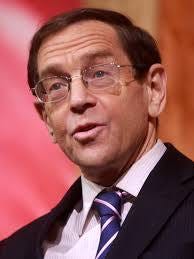
Bruce Fein is a Constitutional scholar and an expert on international law. Mr. Fein was Associate Deputy Attorney General under Ronald Reagan and he is the author of Constitutional Peril: The Life and Death Struggle for Our Constitution and Democracy, and American Empire: Before the Fall.
The other thing that’s important to remember is that the way impeachment works is: even if this House (the 119th Congress) votes for impeachment, the trial could still be legitimate in the 120th Congress by the Senate (it’s sworn in on January 3rd). So it’s not a futile exercise just because you can’t have the Senate trial before we move into 2027. The impeachment under all precedent remains valid until it’s tried in the Senate.
Bruce Fein

News 11/6/26
Our top stories this week are of course the election results. Perhaps the most astonishing are the Democratic victories in Texas. With 98% of the votes in, James Talarico has been elected the state’s next United States Senator, besting his scandal-plagued, Trump-backed opponent, Texas Attorney General Ken Paxton, by a double-digit margin. The last Democrat to win a Senate race in Texas was Lloyd Bentsen, who won his last reelection campaign in 1988. Yet, as impressive as Talarico’s victory is – particularly the margin by which he won – the more shocking results come from the other races in the Lone Star State. Texas State Rep. Gina Hinojosa defeated incumbent Governor Greg Abbott, who was seeking an unprecedented fourth gubernatorial term. While Talarico overperformed his polls, he was generally favored to win; Hinojosa trailed Abbott in most polls yet went on to win by a stunning seven-point margin. Further down the ballot, Democrats flipped the lower chamber of the Texas legislature, and won more statewide races, including the powerful Lieutenant Governor position, which will now be held by Bernie Sanders endorsed Texas State Rep. Vikki Goodwin, along with the Agricultural Commissioner, the Railroad Commissioner, and more. Many see in this victory the culmination of a long-brewing shift in Texas politics towards the Democratic column, driven by an increasingly radical rightwing Texas Republican party alienating Latino voters, suburban moderates and new-arriving Texans coming from states like California. The Democratic triumph across the board in the state is a specific humiliation for Elon Musk, who is estimated to have spent $224 million to buoy Republicans in Texas alone, according to Democracy Now!
More shocking Democratic overperformances played out across the former Confederate states. In South Carolina, Democrat Annie Andrews defeated Darline Graham, sister of the late-Senator Lindsey Graham, to secure a U.S. Senate seat. This is the first Democratic Senate victory in the state since 1998. In neighboring North Carolina, former Governor Roy Cooper trounced his Republican opponent, winning in a nearly 20-point electoral rout. With coattails of this magnitude, Democrats were able to capture a majority in the state House for the first time in 16 years, and flip numerous seats in the House of Representatives, including a win for Richard Ojeda, formerly of West Virginia, who defeated National Republican Congressional Committee Chairman Richard Hudson. In Georgia, Jon Ossoff sailed to re-election and Democratic gubernatorial candidate Keisha Lance Bottoms won by a surprisingly large margin as well. Most jaw-dropping of all perhaps is what appears to be a Democratic victory in the Mississippi Senate race. At the time of this writing, this race is considered “too close to call.” Democrat Scott Colom, an African-American elected DA who was blocked from a federal judgeship under President Biden by his opponent in this race, incumbent Republican Senator Cindy Hyde-Smith, leads by around 1,100 votes. Andrew Desiderio of Punchbowl News reports Senate Democratic leader Schumer is “sending resources (legal and otherwise) down to Mississippi via the DSCC to help with the remaining vote-counting process.” In these races, many see a rebellion against Trump and the GOP led by Black voters incensed by the Supreme Court’s decision in Louisiana v. Callais earlier this year, which eviscerated the Voting Rights Act.
This explosion of popular discontent with Southern Republicans manifested even in races where the Democrats fell short of victory. In Louisiana, Democrat Jamie Davis ran startlingly close against Republican Senate nominee Julia Letlow, with Letlow winning 50.88% to Davis’ 49.12%. Letlow was hand-picked by President Trump in the Republican primary to oust incumbent Republican Senator Bill Cassidy, who voted to impeach Trump following the January 6th insurrection attempt. And, in Florida, both Senate candidate Angie Nixon and Gubernatorial candidate David Jolly lost their respective races by razor-thin margins, despite putting up extremely impressive numbers throughout the state – and Nixon, an avowed Democratic Socialist backed by Bernie Sanders winning Miami-Dade county, notorious ground zero of right-wing Cuban anticastrismo. For her part, Nixon is hinting that she will run again in 2028; she will likely face the same opponent, Ashley Moody, who was appointed to complete the remainder of Marco Rubio’s senate term, per CBS. If Nixon had won this race, she would have had to seek reelection in 2028 anyway. If she runs against Moody again in 2028, and wins, she will win a full six-year Senate term.
Turning to the heartland, Democratic candidate Adam Hamilton succeeded in wresting a U.S. Senate seat in Kansas from Republican incumbent Roger Marshall – a breathtaking achievement in a state where Democrats have not won a Senate seat since 1932. Hamilton, along with his wife, founded the United Methodist Church of the Resurrection in 1990, which grew to become the largest Methodist congregation in the United States. His decisive victory over Marshall also helped to lift Democrat Cindy Holscher to victory in the gubernatorial race, ensuring that Kansas will have a Democratic Governor through 2030. In the Attorney General race, this wave also helped Democrat Chris Mann beat back incumbent Republican AG Kris Kobach, a close ally of President Trump who has long pushed conspiracy theories about non-citizens voting in American elections, per KCUR. Democrats also swept across Iowa, electing Democrat Josh Turek to the Senate and Rob Sand Governor in a certified landslide. Democrats also swept three out of the state’s four congressional districts. In the past Iowa was a competitive state but has turned increasingly red in recent years. Whether this marks the beginning of a true reversal of that trend or simply an acute, if fierce, rejection of Trump’s policies remains to be seen.
Yet, while Democrats in the Prairie and the Great Plains scored unthinkable victories, the independent experiment in similar states unfortunately fell flat. Dan Osborn, the labor organizer who ran a close race against Deb Fischer in Nebraska last cycle, lost his race against billionaire incumbent Republican Senator Pete Ricketts by a greater margin than against Fischer, despite the far more favorable national environment. Attempted independent red state runs by Brian Bengs in South Dakota and Todd Achilles in Idaho similarly proved unsuccessful in dislodging Republican incumbents Mike Rounds and Jim Risch respectively. Most agonizing of all is the loss of Seth Bodnar in Montana. With 92% of the vote in, Bodnar is losing 37.4% to 48.8% against his Republican opponent Kurt Alme, who was foisted upon Montana voters without a primary. If this holds, the margin between Alme and Bodar is just about 12 points, which is exactly the percentage claimed by the Democratic spoiler candidate Alani Bankhead, who stubbornly remained in the race despite virtually zero institutional support and polling that showed her in a distant third place. At least one silver lining can be found in Montana – the victory of Bernie-endorsed House candidate Sam Forstag in the Treasure State’s First Congressional District, where Republicans hold a five-point advantage. Forstag’s win means nearly every single House candidate backed by Bernie Sanders won their races, including candidates in high-profile swing districts like Bob Brooks in PA-7, Rebecca Cooke in WI-3 and Randy Villegas in CA-22, to name just a few. Justin Pearson, who waged a ferocious uphill battle in the newly-redrawn ninth district of Tennessee, fell short of victory by a single percentage point in a district drawn to be R+9.
In more positive news, Democrats scored key victories in the upper midwest. In Ohio, former Senator Sherrod Brown won his comeback bid against Jon Husted, the Republican appointed to fill the seat vacated by Vice President JD Vance. Brown previously held the other Ohio Senate seat from 2007 to 2025. Despite this extraordinary political revival, this truncated term will expire in 2029, and the Toledo Blade reports he has not decided whether or not to seek reelection in 2028. Meanwhile, Dr. Amy Acton positively wiped the floor with her Republican opponent Vivek Ramaswamy, defeating him by a margin of nearly 12 points after his repugnant campaign ad featuring Acton’s estranged, abusive mother backfired. Acton will be the Buckeye State’s first Democratic governor in 15 years. This double-header victory at the top of the ticket helped to bolster the fortunes of Democratic House candidates; despite the Republican-led redistricting efforts earlier this year, all Democratic incumbents held their seats and even managed to flip the seventh, where Brian Poindexter, backed by Bernie Sanders and Dennis Kucinich, ousted the disgraced Max Miller, and possibly the 10th district as well, where Kristina Knickerbocker leads Mike Turner.
In neighboring Michigan, Dr. Abdul El-Sayed won a resounding victory in the race to succeed Democratic Senator Gary Peters, making good on his May prediction that he would “smoke” his Republican opponent Mike Rogers “by 7.” This victory is particularly satisfying given that El-Sayed’s primary opponent, Congresswoman Haley Stevens, sought to sabotage his campaign in the closing days, presenting him with outrageous ultimatums and finally endorsing Rogers outright, despite assurances up to the night before that she would never do such a thing. Stevens’ betrayal triggered an exodus among her staff, expulsion from the Michigan Democratic party, and even speculation that she may be experiencing a mental health crisis. El-Sayed will now become the first Muslim Senator in American history and promises to be a tireless advocate for Medicare for All in the upper chamber. Moreover, Democrat Jocelyn Benson won her bid to succeed Michigan Governor Gretchen Whitmer, and further down the ballot, climate activist and co-founder of the Sunrise Movement William Lawrence won his campaign in the state’s Seventh Congressional District. This race was a rollercoaster featuring all manner of external machinations, including the Republicans spending money to boost Lawrence in the primary, assuming he would be easy to beat, and even allegedly planting a Green Party false flag candidate in the general to siphon votes away from Lawrence. Cloak and dagger tactics aside, Lawrence also overcame $23 million in outright GOP spending – the highest against any Democratic House candidate – to flip this Republican-held seat. In addition to Lawrence and El-Sayed, Michigan’s new Congressional delegation will include Rashida Tlaib and Donavan McKinney, who easily defeated his Republican opponent after winning a pitched primary battle against incumbent Democrat Shri Thanedar in August, making Michigan’s perhaps the most progressive Democratic congressional delegation in the nation, maybe second only to that of New York.
Up north, Democrat Troy Jackson finally succeeded in defeating defeat-defying Republican Susan Collins in Maine. Collins was first elected to the Senate in 1996 and has kept her seat throughout the tumultuous political years since. Most impressively, Collins beat back a Democratic challenge in 2020 by over eight points even as Joe Biden won the state with over 53% of the vote, compared to Trump’s 44%, in that same election. Jackson’s victory is thus all the more impressive for Collins’ past resilience, not to mention the fact that he was a last-minute substitute candidate for the previous Democrat Senate nominee Graham Platner, whose campaign collapsed under a deluge of personal scandals. In the gubernatorial race, Hannah Pingree drubbed her Republican opponent Bobby Charles, winning by a nearly 20 point margin. One key race remains outstanding: the showdown between former Governor Paul LePage and Maine state auditor Matt Dunlap in the Pine Tree state’s second district, an infamous Republican-leaning swing district long held by conservative Democrat Jared Golden. As of now, LePage leads but the race remains too close to call.
Even farther north, the Democrats look poised to pick up another Senate seat in Alaska. Mary Peltola leads by a hair, 48.2% to Dan S. Sullivan’s 47.9%, with three-quarters of the vote counted. If neither Peltola nor Sullivan cross the 50%+1 threshold when all the votes are counted, the state’s ranked choice voting mechanism will kick in, resulting first in the elimination of Daniel J. Sullivan, who received the least votes of the four candidates on the ballot, and the redistribution of the votes he did receive to the remaining candidates in order of preference. Because of how long it takes to receive, count, redistribute, and finally certify the results in the Land of the Midnight Sun, WTHR reports the State of Alaska Division of Elections has set their target certification date no sooner than November 25th – and that is not accounting for the possibility that the Trump administration and Republican Governor Mike Dunleavy will contest the certification of this election, as they have threatened to do on extremely thin legal grounds. In the Governor’s race, Jonathan Kreiss-Tomkins (JKT) is 20 points ahead of his nearest Republican rival, but it remains to be seen whether he will get over the 50%+1 hump as well, avoiding a ranked-choice redistribution that could see his three Republican opponents consolidate their votes into a slim majority. In the Alaska at-large congressional race, Republican Nick Begich leads Democratic-backed independent Bill Hill by a substantial margin, but the race remains uncalled.
Finally, DSA-backed mayoral candidates pulled off victories in Washington, DC, where DC Councilmember Janeese Lewis-George won with well over 80% of the vote after a contentious primary battle to succeed three-term Mayor Muriel Bowser, and in Los Angeles, where Nithya Raman’s insurgent campaign toppled the incumbent Mayor Karen Bass. Other DSA-backed candidates in both cities also won their respective races, with Oye Owolewa winning an at-large Democratic seat on the DC Council and Angela Gonzales-Torres ousting Jimmy Gomez in California’s 34th Congressional District. DSA may notch yet another win in California if Mai Vang defeats incumbent Doris Matsui In CA-07; Matsui currently leads but many votes remain to be counted, per Abridged. If Vang pulls it off, she would become DSA’s ninth member of the House, a breathtaking achievement for Democratic Socialism in America. With these victories piling up, many within DSA are pushing for a DSA-aligned candidate to enter the 2028 presidential contest and help to galvanize the movement on the national stage. As DSA so often says, a better world is possible.
This has been Francesco DeSantis, with In Case You Haven’t Heard.


