



Ralph welcomes back his old running mate, Native American activist, Winona LaDuke, who has devoted her life to advocating for Indigenous control of their homelands, natural resources, and cultural practices to talk about her latest incarnation: hemp farmer. Then, we’ll speak to Hal Weitzman, from the University of Chicago’s Booth School of Business, about how Elon Musk’s feud with Delaware may transform corporate America. Plus, we tick off Robert Reich’s ten policy prescriptions the Democratic Party should fight for to beat the GOP in the upcoming midterms.
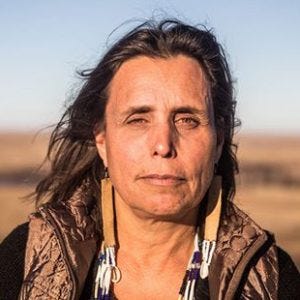
Winona LaDuke is an activist, economist, and author, who has devoted her life to advocating for Indigenous control of their homelands, natural resources, and cultural practices. She is also a two-time vice-presidential candidate with Ralph Nader. Ms. LaDuke lives and works on the White Earth Ojibwe reservation in northern Minnesota, where she runs Winona’s Hemp & Heritage Farm. She is also a member of the Indigenous Hemp & Cannabis Farmer’s Cooperative.
I’m looking first at seed sovereignty. We’re growing [European hemp] varieties and then we’re growing these feral hemp varieties. They’re called feral varieties (which of course, that’s something that I love) which means that when they eradicated hemp in the 1930s with the Marijuana Prohibition Act—well, they missed some spots. And those guys kept growing. And so 80 years of being illegal—isn’t that great? Something that’s illegal for 80 years is still with us, rocking out. And so I figure if you grew illegally for 80 years, you are really a tough hemp plant…And so we are growing out these hemp varieties and built a cooperative because we want to own the seeds and we want to own the technology (the value-added processing), and we want to use this hemp as a part of our future as tribes.
Winona LaDuke
My grandsons are farming. I don’t know who else can say their grandchildren are farming—let me know. My grandchildren are farming. They’re running the horses. They’re running the farms. You know, that’s a retirement plan. My 401k will be worth nothing, but my grandchildren will feed me. This is my strategy.
Winona LaDuke
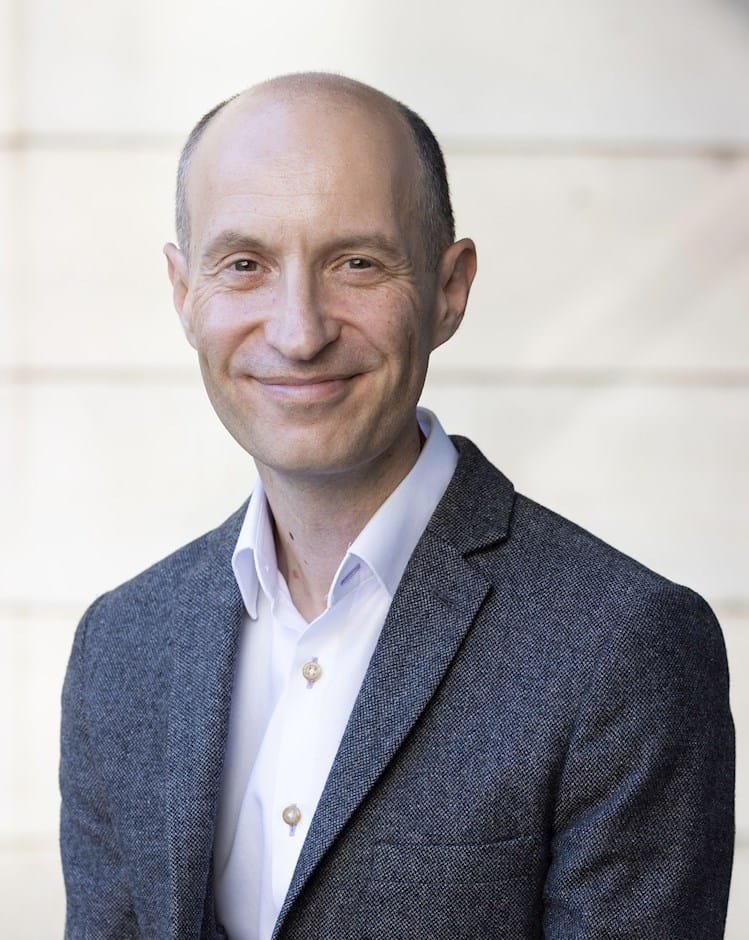
Hal Weitzman is Executive Director for Intellectual Capital at the University of Chicago Booth School of Business, editor-in-chief of Chicago Booth Review, and host of The Chicago Booth Review podcast. A former Financial Times editor and foreign correspondent, he is the author of Latin Lessons: How South America Stopped Listening to the United States and Started Prospering and What’s the Matter with Delaware?: How the First State Has Favored the Rich, Powerful, and Criminal—and How It Costs Us All.
There is a race to the bottom. There’s been a race to the bottom for many decades. That’s not new. I think it’s accelerated somewhat. Delaware has joined that race from having been something of a “premium product” in terms of incorporating companies—Delaware has become a bit more “cut-price” I would say, and in that sense has followed Texas and Nevada. So the conclusion that we have a race to the bottom and it may be worse than Delaware—actually I think Delaware’s already there. So it’s not that it’s getting worse outside of Delaware, it’s getting worse including Delaware.
Hal Weitzman
The trend I think we’re seeing is the exclusion of small shareholders completely—regardless of the status of your shares, this is about how big you are. And if you’re a small shareholder there is no corporate democracy for you… It was practice in the past for activist groups, campaigning groups, to buy one share of a company and then to go to the shareholder meeting so they could make the point that they wanted to make. Now that kind of shareholder democracy is being encroached on. And the extent now is to say: unless you have a large position (regardless of the size of the company and the cost of the shares), you will not be allowed to bring suits against the executives for the correct running of the company.
Hal Weitzman
News 7/17/26
Our top story this week is New York Governor Kathy Hochul’s decision to impose a one-year “pause” on the construction of AI data centers across the state. ABC7 reports that this is the first such moratorium in the nation, despite similar attempts in several states, most notably Maine where Governor Janet Mills vetoed a bill to this effect. Hochul argues that the pause is necessary so lawmakers and regulators can formulate “Guardrails to reduce the risk to our energy grid, minimize land disruption, noise pollution, and protect our natural resources, especially our water supply.” Hochul’s move comes amidst a broader push against AI data centers from the left. Semafor reports Senator Bernie Sanders proposed a nationwide ban in March and many progressives running for state and local office in the midterms have made this a cornerstone of their campaigns. According to this piece, “In February, polling from Marquette Law School found 70% of all Wisconsinites agreeing that ‘the costs of the data centers outweigh the benefits.’ Among Democrats, the number was 85%.”
Another progressive Member of Congress quite literally stepped into another hot-button political issue this week. While visiting a Palestinian village in the occupied West Bank Wednesday, Al Jazeera reports armed settlers stopped the van of Representative Ro Khanna and were “later joined by Israeli soldiers who continued to block the road.” In a video, Khanna points out, settlers can be seen “brandishing M4s [rifles], kicking the tyres of our van, laughing at us, mocking at us, videotaping us.” This continued for over an hour and was only resolved when he reached out to the American Embassy, according to Khanna. Israel has responded to this fiasco by blaming Khanna, accusing the congressman of failing to coordinate his trip with the Israeli government; Khanna retorted that “The [Israeli military] is lying” and called for the arrest of the violent settlers. Conservative political commentator Tucker Carlson excoriated U.S. Ambassador to Israel Mike Huckabee, writing “An American member of congress is threatened by foreign terrorists carrying American rifles, backed by a foreign military paid for by American taxpayers, and the US ambassador to that country says not a word in defense of his own countryman…It’s too much, too insulting and humiliating to America.”
Following his return from occupied Palestine, Khanna again teamed up with Republican Congressman Thomas Massie of Kentucky to sponsor an amendment to the National Defense Authorization Act (NDAA) which would have removed the “United States-Israel Defense Technology Cooperation Initiative” from the must-pass legislation. Responsible Statecraft describes the initiative as “an unprecedented integration of the U.S. and Israeli military industrial complexes,” by creating “an executive agent within the Department of Defense whose sole responsibility is furthering U.S. and Israeli military tech integration across nearly every facet of the defense process.” This article also notes that “Israeli Prime Minister Benjamin Netanyahu has described this shift in the U.S.-Israel relationship as ‘my plan.’” However, House leadership is not backing this commonsense, bipartisan amendment. In a letter, Minority Leader Hakeem Jeffries said he would vote against the amendment, calling it “overly broad” and claiming the amendment would “restrict our country’s ability to confront Hamas, Hezbollah and other terrorist organizations in the region who are sworn enemies of both the United States and Israel,” per the Times of Israel. However, Jeffries pledged not to whip votes against the amendment and indeed the House Minority Whip, Congresswoman Katherine Clark, voted for the amendment as did Speaker Emerita Nancy Pelosi, despite the opposition of Jeffries and House Democratic Caucus Chair Pete Aguilar. The Congressional Progressive Caucus reportedly whipped votes in favor of the amendment.
In more Israel-related news, this week Marco Rubio – who serves as Secretary of State as well as the acting National Security Advisor – announced that the State Department will launch a “sweeping campaign to dismantle…the International Criminal Court.” CNN observes that “The administration’s ire against the ICC goes back to President Donald Trump’s first term, when it targeted the ICC for seeking to investigate alleged war crimes committed by US forces in Afghanistan,” and that since taking office for the second time, the Trump administration has “imposed a slew of sanctions against ICC officials for their attempts to investigate the US and Israel.” CNN also quotes a State Department official who said that top officials, including Secretary Rubio and US ambassadors, “are calling countries as part of a campaign to diplomatically isolate the International Criminal Court.” It is worth noting that “all American presidents since the ICC’s ratification have maintained that the ICC does not have jurisdiction over Americans,” and that Congress even passed a law calling for an invasion and occupation of the Hague if any American serviceman was ever prosecuted by the ICC, implying that this crackdown on the court is not about American sovereignty at all but rather the prosecution of Israeli officials for their war crimes in Gaza.
In another stunning story starring Marco Rubio, the New York Times reports the Secretary of State is functionally “running Venezuela from afar.” The Times story characterizes Rubio’s position as the “de facto viceroy of Venezuela,” effectively controlling the country’s “finances, the distribution of its natural resources and its government.” This story makes clear that while Delcy Rodríguez, the former Vice President of Venezuela under Nicolás Maduro, nominally occupies the presidency, Rubio is the one really calling the shots, with Rubio setting the conditions on what Venezuela’s export revenue “can be spent on, and by whom,” and having the authority to approve or deny key governmental appointments in the country, such as the minister of defense. In short, the United States has established a shocking explicitly neo-colonial regime in the country, fulfilling the gravest prognostications of anti-imperialist critics of American intervention in the Bolivarian Republic.
Closer to home, Bloomberg reports the federal government has officially launched a grand jury investigation into the United Auto Workers and the union’s outspoken president, Shawn Fain. The investigation stems from accusations made by the union’s Vice President, Rich Boyer, who alleged that Fain used his position to secure benefits for his fiancée and her sister – and when Boyer refused to approve the benefits, Fain retaliated by stripping Boyer of his duties as chief negotiator with Stellantis NV. Fain has called the allegations “false” and is accusing Boyer of seeking to influence the upcoming UAW leadership election. Fain also claims that Boyer is the one retaliating after Fain “refused the vice president’s request to hire family members to positions in the union.” Fain has long maintained that the Justice Department, and specifically the DOJ-appointed monitor, Neil Barofsky, has a political grudge against him because “the UAW took an anti-war stance about what was happening in Gaza.” According to Bloomberg, “Both Fain and Boyer have slates running and each is accusing the other of attempting to abuse their positions to benefit family.”
This week, another victim of harassment by the federal government, student activist Mahmoud Khalil, filed a landmark civil rights suit alleging that the government conspired with a number of private groups – including the Heritage Foundation, Betar, and Canary Mission – to “suppress criticism of Israel through a coordinated campaign to dox, jail and ultimately deport student activists.” According to the lawsuit, said activists were “nearly automatically targeted by the Federal Defendants for arrest and removal.” Khalil’s lawyers argue that this “public-private partnership” could violate the “Ku Klux Klan Act, a Reconstruction-era law that sought to restrict government coordination with vigilante groups.” The suit is led by the Center for Constitutional Rights. The AP reports “Soon after his arrest, both Canary Mission and Betar boasted of their role in flagging Khalil’s noncitizen status to the government.” Since Khalil’s arrest, Betar has agreed to “dissolve its nonprofit status,” following a lawsuit filed by New York Attorney General Letitia James accusing Betar’s members of harassing Palestinians.
Turning to the state level, this week 12 state attorneys general, led by California’s Rob Bonta, filed an antitrust lawsuit seeking to block the acquisition of Warner Bros. Discovery by Paramount Skydance, controlled by the Trump-aligned David Ellison. The proposed, $110 billion merger was approved by the Antitrust Division of the Justice Department last month, which reached the dubious conclusion that the merger is “not likely to result in harm to competition or American consumers.” In the filing, Bonta and the state AGs for Arizona, Colorado, Connecticut, Massachusetts, Minnesota, Nevada, New Jersey, New Mexico, New York, Oregon, and Washington allege that the merger “would extinguish competition between Paramount and Warner Bros. and inflict substantial harm on movie theatres, basic cable distributors, and, ultimately, audiences nationwide.” This from Reason.
In the world of philanthropy, CNBC reports Warren Buffett, the billionaire chairman of Berkshire Hathaway, has “excluded the Gates Foundation from his sizable annual charitable donations.” As this report notes, the Gates Foundation has been among the top recipients of his annual Berkshire donations, totaling $47 billion worth of Berkshire stock since 2006. The reason for the exclusion of the Gates Foundation has been much speculated upon, in particular, whether it was due to the recent revelations about Gates’ relationship with Jeffrey Epstein. Asked about this, Buffett said that he had “read a great deal…in terms of what happened, with Bill and Epstein,” calling their relationship “distasteful,” but also saying that he “found nothing in there that was beyond what [he] could picture [himself] doing.” Instead of the Gates Foundation, all of this year’s donations will go to foundations linked to the Buffett family.
Finally, British multinational diamond conglomerate De Beers, famous for coining the “A Diamond is Forever” tagline in 1947, reported this week that they plan to halt work at their “flagship” Venetia mine in South Africa as demand for the stones wanes. The BBC highlights both slackening consumer demand as well as competition from lab-grown diamonds, particularly those produced in China. That said, the closing of the Venetia mine – the biggest in South Africa, accounting for over 40% of the country’s diamond production – will send shockwaves through that country’s already shaky economy. That mine alone employs more than 4,000 people, while the mining sector employs nearly half a million. De Beers said they plan to reopen the mine in two years; in the meantime, they are looking to expand copper mining to keep up with demand from AI data centers.
This has been Francesco DeSantis, with In Case You Haven’t Heard.


