



Ralph speaks to historian Omer Bartov about his new book “Israel: What Went Wrong?” with special guest, international law expert Bruce Fein


Bruce Fein is a Constitutional scholar and an expert on international law. Mr. Fein was Associate Deputy Attorney General under Ronald Reagan and he is the author of Constitutional Peril: The Life and Death Struggle for Our Constitution and Democracy, and American Empire: Before the Fall.
Many of the things that you describe in Israel apply in spades in the United States. We also have an administration that says we’re being invaded militarily by Venezuela gangs, so we have to go kidnap their president and annex Venezuela. We’ve stated that Iran is an existential threat to the United States because at some future time, it’s conceivable they may get one nuclear weapon. We have 5,000, Israel probably has 300 or 400. Or make the argument that we are being invaded by defenseless immigrants across the southern border. And it does seem to me that all countries—I don’t think it’s unique anyway to the United States or Israel, but it’s generally true those in power are there to manufacture fear, to inflate fleas into elephants and say “My gosh, tomorrow the sky is falling down. We need to have national emergencies, rule by decree.” Everything is “an imminent danger”, the Communist domino theory. It’s a very challenging issue. I say what you’ve described in Israel is not unique to Israel. We confront it every day right in the United States. And it works.
Bruce Fein
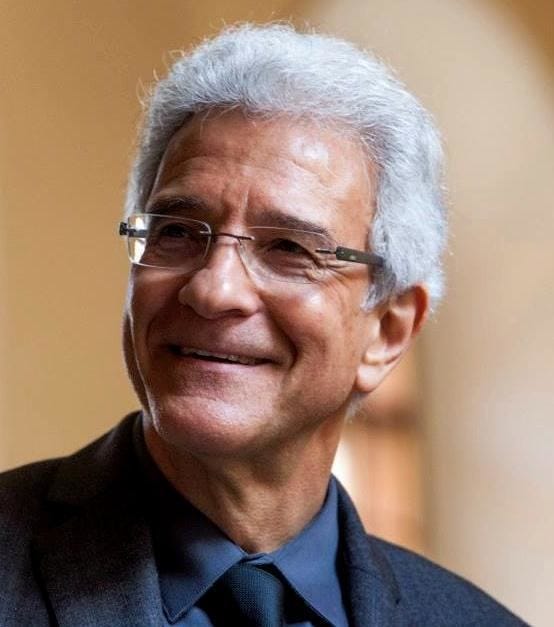
Omer Bartov is the Dean’s Professor of Holocaust and Genocide Studies at Brown University. A historian, Professor Bartov was born on a kibbutz, grew up in Tel Aviv, and served in the Israel Defense Forces during the Yom Kippur War. He went on to become a leading scholar of the German army and the Holocaust, before turning his attention to his native country. His early research concerned the Nazi indoctrination of the Wehrmacht and the crimes it committed in World War II. He then turned to the links between total war and genocide and interethnic relations in the borderlands of Eastern Europe. His current interest is reflected in his recent books, Genocide, the Holocaust and Israel-Palestine: First-Person History in Times of Crisis, Israel: What Went Wrong?, and the forthcoming The Broken Promise: A Personal Political History of Israel and Palestine.
The whole idea of creating a Jewish state (and it says so in the Proclamation of the State from May 1948) is that it would be a state for Jews—that it would be both Jewish and democratic. And that has proven to be not possible. A Jewish state can be both Jewish and democratic only if the overwhelming majority (if not all) of its citizens are Jews.
Omer Bartov
[Zionist zealots] believe that history is on their side—so in that sense, they are similar to Communists they’re similar to Fascists they’re similar to Nazis in that they believe that they can see the way forward, they know the logic of history, and the logic of history as they see it is on their side.
Omer Bartov
In Israel, since the 1980s (really since after the War of 1973, with the rise of the right wing in Israel in particular) the Holocaust has come to serve a particular purpose. Instead of being commemorated as an event that happened in the past that we should remember and commemorate and research, it’s become a kind of image of an imminent danger to Israel. And the farther Israel has moved from the actual event of the Holocaust, and the more the Israeli army has become the military hegemon in its region, the more this alleged threat of an “Auschwitz around the corner” has been used by Israeli governments. Why has it been used? Because Israel actually needs to explain to itself and to its citizens: Why is it bossing it over millions of Palestinians? Half of the population under Israeli control are Palestinians. Two million are citizens, but they don’t have equal rights, and the others have no rights at all (they’re simply under arbitrary military rule). So how do you explain that? You explain that by telling your population and the rest of the world that those Palestinians—who have no power, who can never pose a threat to you—are an existential threat. And in Israel, that has worked quite well.
Omer Bartov
Because of the focus on Hebrew—to create Hebrew as a mother tongue for children whose mothers didn’t speak Hebrew—because of that, there was a great antagonism towards speaking any other language. And the notion of having bilingual schools (that is, of having schools in Palestine where people would learn both Hebrew and Arabic, the language of the place) is not entertained by the vast majority of educators. Now, if you think about what would have been the result of having bilingual schools already in the 1920s and 30s, that children could speak each other’s language and recognize each other’s culture—that could have had a huge effect on how Zionism developed and how the state would have developed. But in today’s Israel, the only bilingual population are the Palestinians. Palestinian citizens of Israel speak Arabic and Hebrew. Most Israelis don’t speak Arabic. And most Israelis who trace themselves (quite large numbers) not to Europe, but to North Africa and the Middle East, where their parents and grandparents spoke Arabic (this was their language) have forgotten that language and were ashamed of their parents speaking it because it associated them with the Arabs. So the loss in this kind of creation of a nation around one language was the ability to imagine yourself as sharing the space with another group.
Omer Bartov
Our top story concerns a progressive insurgent running in a must-win Senate race – and not the one you’re thinking of. Late last week, Senate candidate Abdul El-Sayed won the endorsement of Congresswoman Alexandria Ocasio-Cortez. The New York Times notes that this is AOC’s first Senate endorsement of this cycle, coming just about a month ahead of the August 4th Michigan primary. El-Sayed is quoted saying that he is “honored for what her support says about what this campaign is building and what we’re fighting for,” adding that he thinks that “too many establishment Democrats are…afraid that I will win.” He pointedly attacked Senator Chuck Schumer, charging that the Minority Leader “doesn’t want to see me on the inside of the U.S. Senate,” because El-Sayed would “call out the kind of politics where we take money from corporations and AIPAC to run milquetoast campaigns and don’t say anything about the problems that everyday people are facing.” El-Sayed has announced that he will campaign with AOC and Senator Bernie Sanders in Detroit, Lansing and Grand Rapids on July 18th and 19th, per MLive.
Another earthquake occurred in the Michigan Senate race on July 5th, when State Senator Mallory McMorrow announced that she would be withdrawing from the race – turning what was a competitive three-way race into a head-to-head between El-Sayed and the Democratic establishment pick, Congresswoman Haley Stevens. The Detroit Free Press notes that this announcement “comes after absentee ballots have already been mailed out to some voters and too late to remove her name from the primary ballot,” though voters are able to rescind their absentee votes and submit new ones up through Friday, July 24th. In a video statement, McMorrow maintained that “People are crying out for change and we need to listen.” McMorrow once led her opponents in this race but saw her support collapse and was trailing in a distant third place in recent polls. Rumor also had it that outgoing Senator Gary Peters was privately calling for her to exit the race so centrists could consolidate around Stevens. While many of her supporters are expected to go to Stevens, El-Sayed is energetically courting McMorrow’s voters as well. The Detroit News reports McMorrow herself has announced that she will remain neutral in the remaining days of the primary, leaving her voters to vote their own consciences.
In more Michigan news, DSA-backed congressional candidate Donavan McKinney is running strong in his primary campaign against incumbent Congressman Shri Thanedar, whom McKinney has labeled “Detroit’s own Elon Musk,” according to the New York Post. If McKinney pulls it off, he will join the growing group of DSA members in the House, along with Claire Valdez, Darializa Avila Chevalier and AOC from New York, Chris Rabb and Melat Kiros from Pennsylvania and Colorado respectively, and Rashida Tlaib from Michigan. Another candidate endorsed by his local DSA chapter, Kyle Blomquist, is running for Congress in Michigan but even if he wins his primary he is not expected to flip the deep red 1st congressional district.
In Missouri, Cori Bush has also won the support of DSA for her comeback congressional run against Wesley Bell, who defeated her in the 2024 primary, Andrew Solender reports. Bush had already won the support of her local DSA chapter, along with many other progressive organizations, and has been endorsed by Senator Bernie Sanders, Congresswoman Rashida Tlaib, and former Congressman Jamaal Bowman. This week though, she won the support of the national DSA. In a statement, Bush wrote “I am honored to be once again endorsed by the Democratic [Socialists] of America as I campaign to return to Congress and keep building our movement to fight for economic justice, Medicare for All, abolishing ICE, and a world where everyday people have a real voice in our workplace’s neighborhoods and society.” Bush also praised DSA for its “decades of organizing…[mobilizing] thousands of people across the country to demand an economy that works for all of us…[and] take on war profiteers, the for-profit healthcare industry, and the billionaire funded lobbies that subvert our democracy.” There has been little polling of this race, but what there has been appears to show the race in a statistical dead heat. One sign that Bush is being taken seriously is the new $865,000 ad buy taken out by the United Democracy Project, an AIPAC cutout.
Ironically, it would seem that American Jews have a more favorable view of the progressive left than Israel. According to the Forward, a new AP poll found that “44% of American Jews hold a favorable opinion of Zohran Mamdani, compared with 39% who view him unfavorably.” This is in contrast to the 32% of respondents who said they have a favorable opinion of Netanyahu and 59% who said they have a negative view of the Israeli PM. Perhaps more surprisingly, Pennsylvania Governor Josh Shapiro, a “staunch supporter of Israel,” garnered only a 41% favorability rating, though far more respondents said they don’t know enough about him to have an opinion than said they have a negative view.
Turning back to the Senate, the other major story this week of course is the fall of Graham Platner. Accusations of sexual assault, detailed in a POLITICO article, resulted in a deluge of opprobrium that cascaded upwards culminating in Platner’s earliest and highest profile supporter, Senator Bernie Sanders, calling on him to drop out of the Senate race in Maine. In a video message released Wednesday, Platner stated that he would be suspending his campaign effective immediately, later telling staff that he plans to wait until Monday, the final possible day, to formally withdraw from the race, Axios reports. In the same video, Platner categorically denied the accusations calling them “all false,” and maintaining that the “things that have been claimed did not happen.” He implied that the scandal was orchestrated by “those in power“ who would “rather see Susan Collins win than have me be the next Senator from Maine.”
Platner’s impending, late-stage withdrawal from the race has set off a chaotic blitz primary to replace him as the Democratic nominee. Numerous candidates have announced they are running including former Maine Senate president Troy Jackson, former Director of Maine’s Center for Disease, Control and Prevention Nirav Shah, co-founder of Maine beer company Dan Kleban, Maine Secretary of State Shenna Bellows and state lawmaker Valli Geiger, along with Jordan Wood and Paige Loud, both of whom ran in the Maine second congressional district Democratic primary. The actual process for selecting a nominee has been the subject of debate – with many progressives arguing for caucuses – but POLITICO reports that by July 27th, “600 delegates must be selected,” including 500 from the state’s 16 county parties, and these delegates will decide on a candidate to replace Platner via “an unprecedented nominating convention,” wherein all delegates come in unpledged to any candidate setting the stage for “what could be a raucous and unpredictable free-for-all.” It remains to be seen how this will all shake out, but it is notable that almost all of these candidates poll very strongly against Senator Susan Collins, with many polling higher than Platner ever did, while the Democratic Party’s handpicked primary candidate, sitting Governor Janet Mills, still polls lower than Platner even since the scandal broke.
For our final Senate story, we turn to the senior Senator from Kentucky, Mitch McConnell. McConnell was recently found unconscious in his Washington, DC home and has been hospitalized since, and while Republican Senators and media figures like Scott Jennings claim to have spoken with him directly, his being sequestered away from the public has fueled rampant speculation about the severity of his condition and why it is being kept so secretive. Forbes reports that some figures on the right, including Steve Bannon, are “suggesting the Republican establishment is shielding the state of McConnell’s health from the public to allow him to remain in office long enough to avoid [Kentucky Congressman Thomas] Massie running for his seat.” Former Congresswoman Marjorie Taylor Greene told TMZ, “Thomas Massie would make a great senator.” The Hill reports that Andy Beshear, the Democratic Governor of Kentucky, sent a letter to McConnell’s Senate office strongly requesting an update on the Senator’s health, noting that “Over the last several weeks, Kentuckians have grown increasingly concerned about the health and well-being of Sen. McConnell,” and that “Allowing speculation to continue in the media is not fair to the Senator or to Kentuckians, and my hope is that this provides him the opportunity to share the information in a transparent manner, direct from the source.”
In more positive news, AP reports former Wisconsin judge Hannah Dugan, who helped an immigrant escape ICE by ushering him through her jury room door was spared prison time in her sentencing this week. After the incident in her court room, Dugan was convicted of felony obstruction in what was widely seen as a political trial designed to exact retribution on behalf of the Trump administration. Dugan resigned her circuit judgeship under this assault; in her resignation letter, she warned that this prosecution threatened “the independence of our judiciary.” Dugan was fined $5,000.
Finally, in spiritual news, a story in the National Catholic Reporter recounts how Pope Leo XIV excommunicated thousands of clergy and followers of the far right, schismatic group, the Society of St. Pius X. While bishops and priests are judged prima facie schismatic for their consecration in the Society, lay followers of the sect will be judged schismatic if they consciously choose “adherence to the society over obedience to the pope,” and “exclusive participation in Lefebvrian ‘ecclesial’ acts, without taking part in the acts of the Catholic Church,” a reference to the group’s founder, Archbishop Marcel Lefebvre. The proximate cause of this excommunication was the Society creating four new bishops in open defiance of Pope Leo, essentially daring the Church to act. This piece notes that the Society “has long been a thorn in the side of Rome,” and notes that the new papal decree rolls back privileges granted to the sect under Pope Francis, including administering the sacrament of penance and solemnizing marriages.
This has been Francesco DeSantis, with In Case You Haven’t Heard.


