



Ralph talks to journalist and M.Div. Chris Hedges about Pope Leo XIV's encyclical on artificial intelligence. Then, Ralph speaks with Rick Engler (former member of the US Chemical Safety and Hazards Investigation Board) about Trump's proposed closing of that agency. Finally, Ralph pays tribute to some recently departed friends.

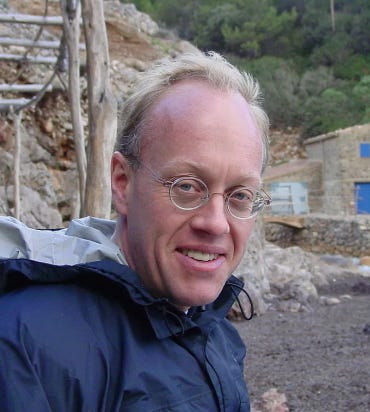
Chris Hedges is a Pulitzer Prize-winning journalist, who spent nearly two decades as a foreign correspondent in Central America, the Middle East, Africa and the Balkans. He is the host of The Chris Hedges Report, and he is a prolific author— his latest book is A Genocide Foretold: Reporting on Survival and Resistance in Occupied Palestine.
I think that Pope Leo kind of missed the point of AI. In that he describes that it could be a positive force for Catholic education (these are his words), compassionate health care, creative platforms that tell the Christian story with truth and beauty. I think those were all indications to me that he didn’t quite understand what AI is about. It’s not about education, it’s not about compassion, it’s not about truth, and it’s not about beauty. It is a very pernicious force that will go beyond, of course, replacing all sorts of labor, but creating a world where fact and fiction are blurred together.
Chris Hedges
I think that mass organization is kind of all we have left as we barrel towards an authoritarian state. Congress doesn’t function, certainly doesn’t function as Congress was designed to function. They have surrendered their traditional constitutional authority, including, of course, the call for Congress to declare war. And this kind of unitary executive branch—this was put into place, by the way, before Trump. He’s just taken advantage of it…And I think that it’s absolutely fundamental that we recapture that kind of militancy, that kind of organized workforce that has traditionally throughout our history been such an important corrective to democracy—along with, of course, journalism.
Chris Hedges
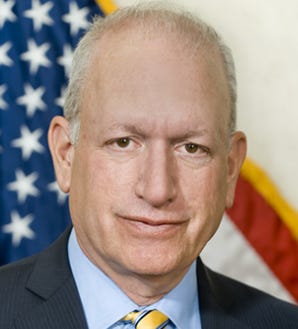
Rick Engler is a former U.S. Chemical Safety and Hazard Investigation Board member and labor advocate who founded the New Jersey Work Environment Council. He has advocated for successful landmark state and national public policies that ensure workers and the public’s “right to know” about potential chemical dangers, and that promote safer processes, chemical incident prevention, and whistleblower protection.
The CSB is unique. I mean, nobody would think of abolishing the National Transportation Safety Board. And no one should think about abolishing the Chemical Safety Board, which does the same thing. It’s not about issuing, in this case, fines or violations. It’s about trying to understand the underlying causes of what led to these incidents.
Rick Engler
[Trump’s allies] have a certain religious fervor about this. When I talk to plant managers, the plant managers of the corporations are much more careful and nuanced in most cases. They don’t want their own plants to explode. But somewhere at the higher corporate levels, I think they’re just willing to take the risks that the tradeoff for them is: Trump is supporting them in so many ways, why interfere? Why become part of some nuanced opposition to the most extreme EPA attacks? But I do think the elimination of the CSB is driven by the Trump administration in a way that wouldn’t be happening if it was just left to the chemical industry trade associations alone. I’m not sure that’s an adequate answer. I’m actually kind of puzzled by it. Because it’s also really clear that if there was any one major incident, it would cost so much money—not only in the human tragedy of the lives lost and neighbors harmed and evacuations and shelter-in-place and property damage, but these incidents destroy facilities.
Rick Engler
News 6/12/26
Our top stories this week come to us from California, where, after an excruciatingly protracted wait, authorities have finally called some of the most high-profile races. In Los Angeles, Democratic Socialist City Councilwoman Nithya Raman has secured the second slot in the mayoral race, beating out reactionary former reality television star Spencer Pratt, PBS reports. Pratt garnered significant attention from conservative media for his slick AI-generated ads and his false claims about living in an airstream trailer after his LA home burned down in the recent fires. In actuality, he was living in the posh Bel Air hotel, billed as a campaign expense, per TMZ. Now the question becomes whether or not Raman will be able to expand her coalition to unseat incumbent Mayor Karen Bass in November.
If Raman’s victory is the good news however, the bad news is that Trump-endorsed Republican Steve Hilton will advance in the gubernatorial race. He will face off against former California Attorney General and Secretary of Health and Human Services Xavier Becerra, who has accepted large campaign contributions from the California Association of Realtors, the California Medical Association and even Chevron, per CalMatters. This outcome means progressive billionaire Tom Steyer will not advance. Many are placing the blame for this on former Congresswoman Katie Porter, who remained in the race despite clearly failing to achieve any real viability throughout the race. This has drawn comparisons to Elizabeth Warren’s perceived role as a spoiler candidate vis-a-vis Bernie Sanders in the 2020 Democratic Primary, particularly since Porter is a highly visible protégé of Senator Warren. In his concession speech, Steyer closed by telling his supporters “Pay attention. Know what you deserve, and know who is on your side. Understand who the villains are, and say their names out loud. Continue to demand more from your leaders and your government, until they give you the California – and the country – you know you deserve. I will be with you all the way.”
Elsewhere in California however, progressives scored major victories. In California’s 22nd congressional district, Bernie Sanders-backed Randy Villegas secured a spot in the top two, beating out his opponent Jasmine Bains, who enjoyed the backing of AIPAC and 53 corporate donors, according to the American Prospect. He will face Republican incumbent Congressman David Valadao in November. Even more impressive is the victory of progressive challenger Mai Vang in California’s 7th district primary, where she actually emerged as the top vote getter, beating out longtime incumbent Congresswoman Doris Matsui. However, because Matsui, who is 81 years old, won the second-most votes, she will still advance to the general election.
Another much-anticipated primary was held this week on the exact other end of the country. In Maine, Graham Platner trounced his opponents in the Democratic Senate race, winning over 70% of the vote despite a concerted campaign against him in the national press. In his victory speech, CNN reports Platner wrote off the smears, saying “They don’t know Maine.” Furthermore, he said “If you believe, as I do, that we can change our politics, and change our country, then you must also believe that people can change…To all those who feel let down, disappointed, or disillusioned. It is my job to earn your trust, your faith, and your support. And I will spend every day of this campaign, and if I have the privilege, every day in the United States Senate, doing exactly that.” Platner will face off against five-term incumbent Senator Susan Collins in a race that will be decisive if Democrats are to have any chance of retaking the Senate in the 2026 midterms.
Turning towards the plains, two candidates are starting to show a surprising level of viability in heavily Republican, rural states. First, in Idaho, Todd Achilles is running as an independent against Republican incumbent Senator Jim Risch. Achilles served as a tank commander and armor officer in the Army before a varied career in the corporate world, education and now politics, according to Independent Voter News. The most striking development in this race is a new poll showing that while “Achilles starts out…behind by 14 points at 48-34…once voters hear biographical information about him and negative messaging about Senator Risch, he gains a full 17 points…[leading] Risch, 41% to 38%.” If accurate, this would be a stunningly close race in a state where registered Republicans outnumber registered Democrats by a margin greater than 5-to-1.
In South Dakota, Brian Bengs, another veteran turned educator – turned, in this case, National Park Ranger – is running shockingly close to incumbent Republican Senator Mike Rounds in a head-to-head matchup. According to the South Dakota Standard, the latest polling shows Rounds leading Bengs 44% to 40%, with 16% undecided. Moreover, like the Achilles poll, when voters are given biographical information about Bengs and negative messaging about Senator Rounds, that margin flips to 44% in favor of Bengs, compared to just 42% for Rounds. If these polls are accurate and independent candidates – not just Achilles and Bengs but also Dan Osborn in Nebraska and Seth Bodnar in Montana – prove viable, perhaps even victorious, in states long seen as out of reach for non-Republicans, there will have to be a serious reckoning with the toxicity of the Democratic Party brand in the American heartland.
In Michigan, progressive candidate Abdul El-Sayed has picked up perhaps the most critical possible endorsement in the state: that of the United Auto Workers. In a statement, the union wrote that “UAW members in Michigan want a fighter in Washington, D.C. who isn’t afraid to push forward a strong working-class agenda with moral clarity…From Medicare for All to banning stock buybacks, Dr. Abdul El-Sayed is ready, eager, and well-equipped to move our core issues in the U.S. Senate.” Whether because of this endorsement or not, El-Sayed now seems to be in the driver’s seat in this primary. This endorsement dovetails with UAW President Shawn Fain’s rumored frustration with the mainstream labor movement for not doing more to back labor candidates, such as Clare Valdez in New York, who was a UAW organizer before entering the State Assembly.
On the House floor meanwhile, lame-duck dissident Republican Congressman Thomas Massie delivered a barn-burner of a speech this week, demanding that the government reopen the investigation into the 1967 Israeli attack on the USS Liberty, Al Jazeera reports. The attack on the Liberty, a US Navy vessel, killed 34 service members and injured 171 others. For decades, Israel has claimed that this was nothing more than an accidental incident of friendly fire, but the surviving veterans have long disputed this explanation, contending that it was a deliberate attack, either as a “false flag operation or because they simply didn’t want anybody observing what they were doing that day.” Massie called on the House to “give them closure…It’s long overdue. And then they can have their justice.”
Looking to Latin America, the presidential election in Peru is, predictably, coming down to a razor thin margin, WLRN reports. This race, between left-wing Senator Roberto Sánchez and Keiko Fujimori, perennial presidential candidate and daughter of former dictator Alberto Fujimori, currently stands at 50.004% for Fujimori and 49.996% for Sánchez, with 98.258% of the votes tabulated. Sánchez was favored to win after the in-country votes were counted, then Fujimori pulled ahead when the votes from Miami came in, other absentee votes eroded that margin and gave Sánchez the edge once again but Fujimori has yet again pulled ahead by a hair. This is Fujimori’s fourth presidential campaign, making it to the runoff each time but ultimately losing by the narrowest of margins.
Finally, in Colombia, Progressive International reports that while Colombian President Gustavo Petro presides at the United Nations Security Council, “conservative forces in the country’s legislature have conspired against the constitution to ‘SUSPEND’ his presidency — just 11 days from the run-off presidential election.” While Reuters adds that the proposal must be “debated and approved by all 16 members of the [legislative Commission of Investigation and Accusation] and subsequently by the Senate before it can take effect,” it is hard to see this as anything besides an opportunistic grab for power while the proverbial cat is away. Petro’s four-year term ends in August; the runoff in the presidential election, between leftist Ivan Cepeda and right-wing lawyer Abelardo De La Espriella, will be held on June 21st.
This has been Francesco DeSantis, with In Case You Haven’t Heard.


