



Ralph speaks to Baroness Beeban Kidron, a member of the UK House of Lords and a leading voice on children’s rights in the digital environment, whose book is “Users: How Big Tech Took Control and How to Fight Back.” Then we welcome back whistleblower Becky McClain a biotech scientist injured in an unsafe lab and author of “Exposed: A Pfizer Scientist Battles Corruption, Lies, and Betrayal, and Becomes a Biohazard Whistleblower.”


Baroness Beeban Kidron is a member of the UK’s House of Lords and a former film director. She is a leading voice on children’s rights in the digital environment and a global authority on digital regulation. She has played a central role in establishing standards for online safety and privacy across the world. She is the author of Users: How Big Tech Took Control and How to Fight Back.
The things that children experience online are deliberately designed to distract them. Now, they are there to distract them because those companies want the attention so they can advertise. They want their data so that they can perfect their commercial terms,their product. And they even want their attention to compete against the other people who are competing for their attention. So here we have an absolute arms race for a child’s attention.
Baroness Beeban Kidron
I do want to say very clearly to anyone listening: This is a battle you shouldn’t be fighting on your own. And there is a responsibility for politicians—for both local politicians and federal politicians (national in our case, here in the UK) —to actually put these companies under the same sort of strictures that all other corporate companies do… One of the things I’m looking at is whether we can recategorize apps as products. And then they’ll have all the product liability, the product safety, consumer rights—all the things that we expect of everything else in our life from our food to our cars to our toys. That they would actually have to think before they roll them out: Are they safe? And when they’ve proven unsafe, we would have a very clear set of legal approaches to address that.
Baroness Beeban Kidron
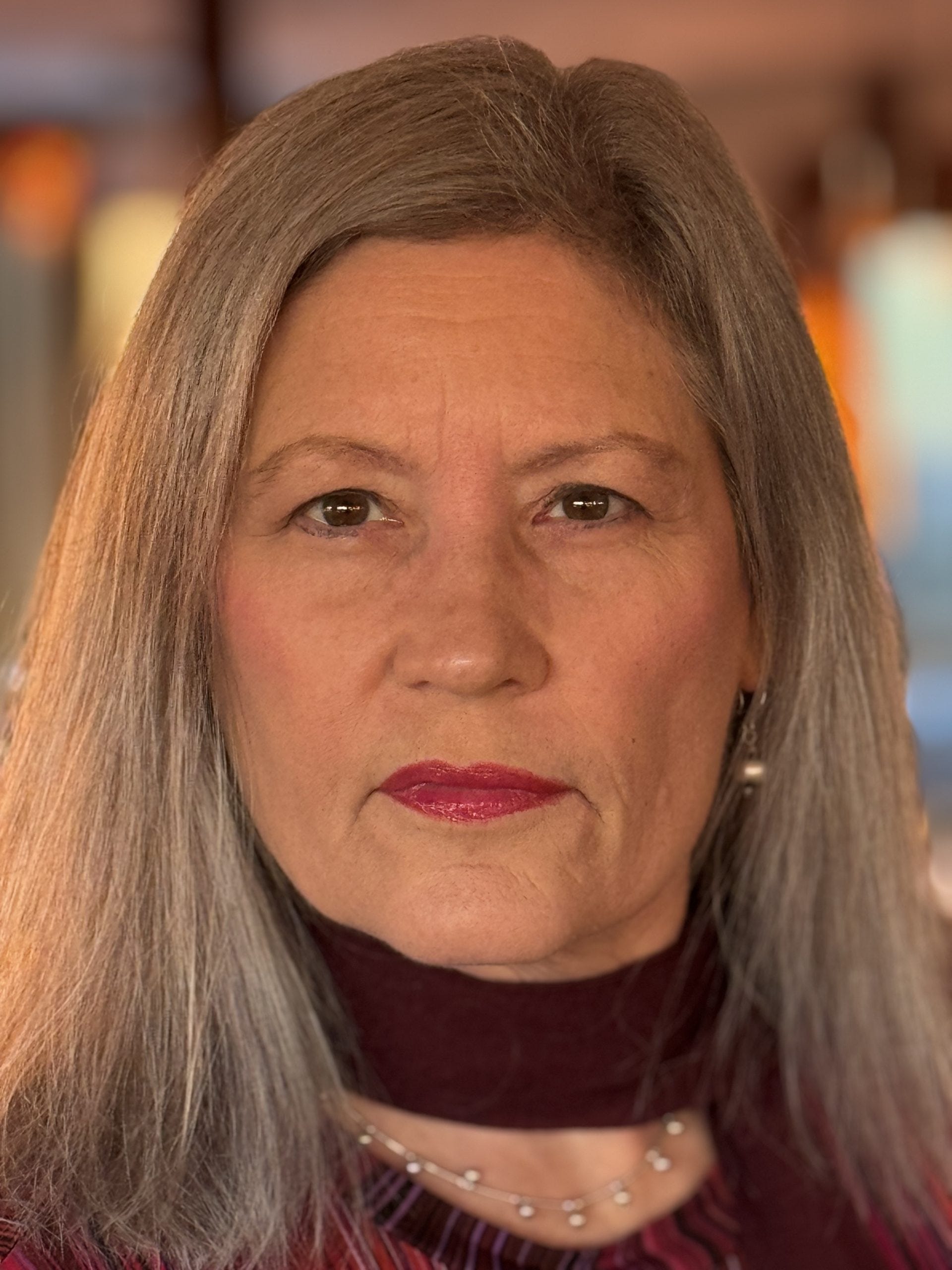
Becky McClain is a retired biotech worker and research scientist. She is known as the first successful biotech whistleblower who spoke and reported on biolab safety issues of public concern. On April 1, 2010, Ms. McClain won a federal court whistleblower trial against Pfizer, Inc., which centered on free speech rights concerning biosafety and public health. She is the author of Exposed: A Pfizer Scientist Battles Corruption, Lies, and Betrayal, and Becomes a Biohazard Whistleblower.
The public wants transparency to ensure that biolabs are run ethically, safely, responsibly, and with accountability. Transparency into these matters builds public trust with science and with government. But without free-speech protections for scientists and also medical physicians, transparency fails, accountability is dismissed, and the public trust hits rock bottom.
Becky McClain
News 8/14/26
This week, a new round of primaries was held in the upper midwest and New England. The biggest shock of the night was the defeat of Francesca Hong in the Wisconsin Democratic gubernatorial primary. Hong, a Wisconsin State Assemblywoman and member of Madison DSA, went into election night leading in the polls and while she won an astonishing 311,000 votes, her opponent – Milwaukee County Executive David Crowley, with the endorsement of sitting Democratic Governor Tony Evers – maintained a lead of approximately one-half of one percentage point throughout the night. As the final margin will be under 1 percent, Hong is entitled to request a recount, according to the Milwaukee Journal Sentinel, but WKOW reports she has conceded the race. Hong was seen as the best chance for the insurgent, DSA-aligned left to capture a gubernatorial nomination this cycle, particularly in a crucial swing state, but her campaign was dogged by electability concerns and unpopular past statements made by the candidate. Crowley will face Republican Congressman Tom Tiffany, who cruised to an easy victory in the GOP gubernatorial primary, in November.
The Minnesota primaries delivered more encouraging results for the left. In the high-profile Senate primary to replace retiring Senator Tina Smith, Lieutenant Governor Peggy Flanagan emerged victorious over her opponent, Congresswoman Angie Craig. Flanagan was backed by a broad, progressive coalition – including Senators Bernie Sanders, Elizabeth Warren, Ed Markey, and outgoing Senator Tina Smith herself – while Craig was backed by more centrist Democrats like House Minority Leader Hakeem Jeffries and ultrazionist Democratic Congressman Josh Gottheimer. If elected, Flanagan, a citizen of the White Earth Nation, would be the first Native American woman to serve in the U.S. Senate, per the Minnesota Reformer. Flanagan has also gone on record saying that Chuck Schumer, who would be poised to lead the Senate Democrats as Majority Leader if the party retakes that chamber, needs to be replaced with a “progressive champion” though she has not gone as far as Abdul El-Sayed in Michigan who explicitly called for Schumer to be replaced by Maryland Senator Chris Van Hollen, as reported by Semafor.
In more Minnesota news, Congresswoman Craig’s decision to vacate her old seat in the state’s second congressional district “created a crowded primary for her seat,” according to the Minnesota Star Tribune. On Tuesday, progressive candidate Matt Little triumphed. Little is a strong proponent of Medicare for All and does not blanch at describing Israel’s campaign in Gaza as a genocide. Little overwhelmingly won the endorsement of the Minnesota Democratic-Farmer-Labor Party and of congressional progressives like Reps. Pramila Jayapal and Greg Casar, as well as the Progressive Caucus PAC. If Little wins in what the Star Tribune describes as a swing district historically, it will send a strong signal that progressives can win even in tough districts.
In New England, the results tell a somewhat different story. Specifically, in Connecticut’s first congressional district, 14-term incumbent Congressman John Larson lost his primary to former Hartford Mayor Luke Bronin, over 30 years Larson’s junior, by over 20 points. However, Bronin is far from a progressive challenger. Whereas Larson enjoyed the backing of the Working Families Party and Congressman Jamie Raskin – though he also had the backing of AIPAC – Bronin’s only major national endorsement was from former Transportation Secretary Pete Buttigieg. In short, this would best be described as a non-ideological, but rather age-based primary challenge. This will surely set off major alarm bells for another aged incumbent in New England facing a much younger primary challenger: Senator Ed Markey of Massachusetts. Additionally, as Ryan Grim notes, “John Larson was/is the champion of the bill to expand Social Security, which was up to…200+ cosponsors but [former Speaker Nancy] Pelosi would never allow it to get to the floor. There’s now an extremely popular bill that could actually pass that needs a lead sponsor.”
Another recent primary loss is worth examining: that of Kshama Sawant in Seattle. Sawant, a former Seattle City Councilmember aligned with the Trotskyist Socialist Alternative party, resigned her council seat and sought to unseat her local Democratic Congressman Adam Smith, running as an independent in Washington’s ninth congressional district. The state of Washington has a top two primary system, so Sawant would have only had to get the second most votes to secure a head-to-head matchup against Smith in November. Yet, instead Sawant finished a distant third behind Smith and the Republican candidate Doug Basler. Perhaps that doesn’t seem surprising – independent and third party candidates are often outspent by huge margins. Yet, the facts belie that explanation. In fact, a new piece on the Joe Wrote substack finds that “Sawant’s campaign wasn’t the rag-tag, bootstrapped operation that we typically see from insurgent socialists. Sawant reported $607,493 in campaign spending, meaning she outspent Republican Doug Basler by over six-to-one and still lost to him.” Wrote goes on to state that “The Sawant campaign spent $25.33 per vote, the highest for any candidate in the race…The only registered PAC that spent on the race was Sawant’s Revolutionary Change PAC, which raised $5,600 through ActBlue and spent it on billboards.” If nothing else, this test case demonstrates that money is not enough for the left to break through the two-party duopoly. A candidate also needs institutional, organizational support – like that of DSA – and, perhaps most importantly, broadbase solidarity with the other component parts of the movement. Going it alone simply will not get the job done.
In more independent and third party news, we have an update to a previous story about the race for Congress in Pennsylvania’s seventh congressional district. Last week, we discussed Andrew Tupone, a candidate running in this race on the Green Party ballot line, despite the GP of Pennsylvania distancing themselves from him – and spokesman Chris Robinson even calling him a “a nice Republican.” According to Lehigh Valley Public Media, the Green Party is now going a step further, formally requesting the Pennsylvania courts “either kick Tupone off the ballot or require him to identify himself as a member of another party.” In their petition to the court, the Green Party argues that “Candidate Tupone and his agents or affiliates who circulated his nomination papers misled voters into signing the nomination papers on the mistaken belief that they were helping to place a candidate supported by the Green Party onto the ballot.” This piece also notes that three Lehigh Valley residents are challenging the petitions Tupone presented to get on the ballot, arguing that technical errors would disqualify thousands of these signatures. For his part, Tupone “has denied having any ulterior motive to enter the race or accepting financial assistance from any outside groups.”
At the same time, in Nebraska, it seems there are two, dueling faux third parties seeking to siphon off votes from the other side. The Nebraska Examiner reports that both the “Nebraska Democratic Party and the national Working Families Party have sued Nebraska’s Working People Party to block it from the fall ballot.” The Democrats and WFP are seeking to block Nebraska Secretary of State Bob Evnen from officially recognizing the party, and to “declare that the party’s name is breaking state law because it is meant to confuse voters.” Apparently, Nebraska election law includes a provision allowing the secretary of state to “reject a candidate’s filing if…that someone is not a ‘good-faith candidate’ or is trying to cause confusion for voters,” and that “objections to party names can be considered.” The kicker is that last week, the Nebraska Republican Party filed a lawsuit alleging that the “America First Party” is a similarly bad-faith attempt to confuse and deceive voters and thereby undercut the fortunes of Nebraska Republicans. A Nebraska judge has issued an emergency injunction stopping certification of both the Nebraska Working People Party and America First Party through August 20th.
Turning to local news, Los Angeles Mayor Karen Bass appears to be moving against Councilmember Nithya Raman, her Democratic rival for the mayoralty in the general election. LAist reports that while Raman has chaired the Council’s powerful Housing and Homeless Committee since 2023, Bass’ close ally, Council President Marqueece Harris-Dawson is “planning to announce…that the city will split the committee into two parts — one on housing, the other on homelessness — neither of which will be led by Raman.” In a campaign video, Raman alleged that the move constituted political retaliation, saying “I called for an audit of our homelessness programs…and now I’ve been removed…I might be getting punished for running against Mayor Bass, but Angelenos are the ones paying the price for these political games.” Mayor Bass and Councilmember Raman finished first and second respectively in the June primary, meaning they will face off in November with no Republican on the ballot.
In New York, Mayor Zohran Mamdani announced this week that he will throw his weight behind a new bill in the city council seeking to curb Amazon’s practice of utilizing subcontractors instead of directly employing delivery workers. The Wall Street Journal explains that although these subcontractors “aren’t direct employees of…Amazon [or other companies], they often wear branded uniforms or vests and drive corporate-branded vans or trucks,” but are not entitled to the same workplace protections and are excluded from collective bargaining. In a statement, Mamdani highlighted how “Corporations like Amazon build billion-dollar business models by insulating themselves from accountability through a system of exploitative subcontracting.” The Journal reports the bill would also “require warehouse operators to obtain licenses from the city,” and in order to get a license, ”operators would have to adhere to new safety, training and employment requirements, including hiring thousands of the city’s contract couriers.” In response, Amazon is, as usual, threatening to move its business out of the city, but also deploying its secret, New York-specific weapon: their chief lobbyist, Jessica Schumer, daughter of Senate Minority Leader Chuck Schumer, according to the American Prospect. This sets up a major clash between an array of titanic forces in New York politics and whether or not Mayor Mamdani emerges triumphant will be a huge test of his political clout.
Finally, AP reports the parliament of Lebanon voted this week to abolish the death penalty, making it the first nation in the Arab world to do so. This piece notes that the country has maintained an unofficial moratorium on capital punishment for over 20 years; while death sentences have been issued since then, they have all been suspended or commuted. The official sentence of capital punishment will be replaced with “life imprisonment with aggravated hard labor,” a somewhat vague legal concept that will have to be defined and refined as time goes on. AP adds that this vote comes amidst the Lebanese parliamentary debate over a proposed general amnesty law, that could “reduce sentences or even release convicted militants,” from the country’s various civil wars, as well as others convicted of drug-related crimes. The parliamentary bloc of Hezbollah voted against the law. Lebanon banning capital punishment stands in stark contrast to the Israeli Knesset, which voted in May to adopt a new death penalty statute described by the United Nations Office of the High Commissioner for Human Rights as perpetuating “racial discrimination against Palestinians” and amounting to “a grave erosion of human rights.”
This has been Francesco DeSantis, with In case You Haven’t Heard.


