



In a program devoted to the topic of AI, Ralph welcomes first, Tyson Slocum, director of the energy group at Public Citizen, who tells us about the local backlash against the construction of data centers. Then New York Times climate writer, David Wallace-Wells, explains how the Big Tech CEOs did not count on human beings possibly rising up against them and their machines.

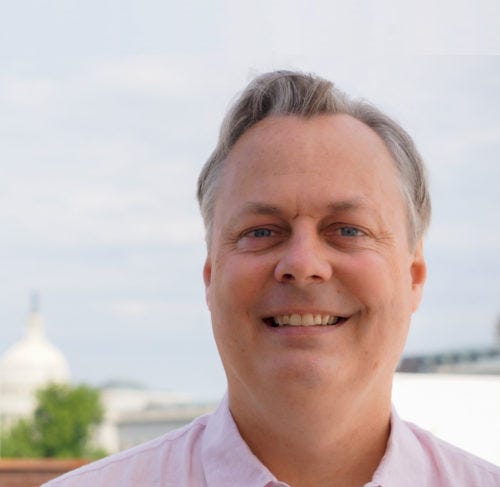
Tyson Slocum is director of Public Citizen’s Energy Program, covering the regulation of petroleum, natural gas and power markets. He serves on the U.S. Commodity Futures Trading Commission’s “Energy & Environmental Markets Advisory Committee,” and frequently intervenes before the Federal Energy Regulatory Commission (FERC) representing the interests of household consumers.
The basic question is they (Big Tech companies) are developing essentially governmental powers— governmental powers— not market powers or corporate powers. They’ve reached a level now where they are our government, the corporate government. And we have to escalate our urgencies to that level. It’s more than just the hour is late. The hour is over. So we have to go back and respond with a completely unprecedented level of public interest, standards, etc., including whether this technology (AI) should be allowed at all.
Ralph Nader
I definitely see that we are in a speculative bubble. That bubble will burst. And folks within the AI industry, like Sam Altman, have been very clear where they have publicly said, when the bubble breaks, we expect to get a financial bailout because our AI applications are so important to the national interest.
Tyson Slocum
And the backlash to data centers isn’t just about, oh, I’m concerned about my power rates going up or I’m concerned about the noise or the water usage. It’s also a civil rights and human rights issue where people are saying, I don’t like this vision that Big Tech is laying out for us that is going to be produced in this building down the street from our community.
Tyson Slocum
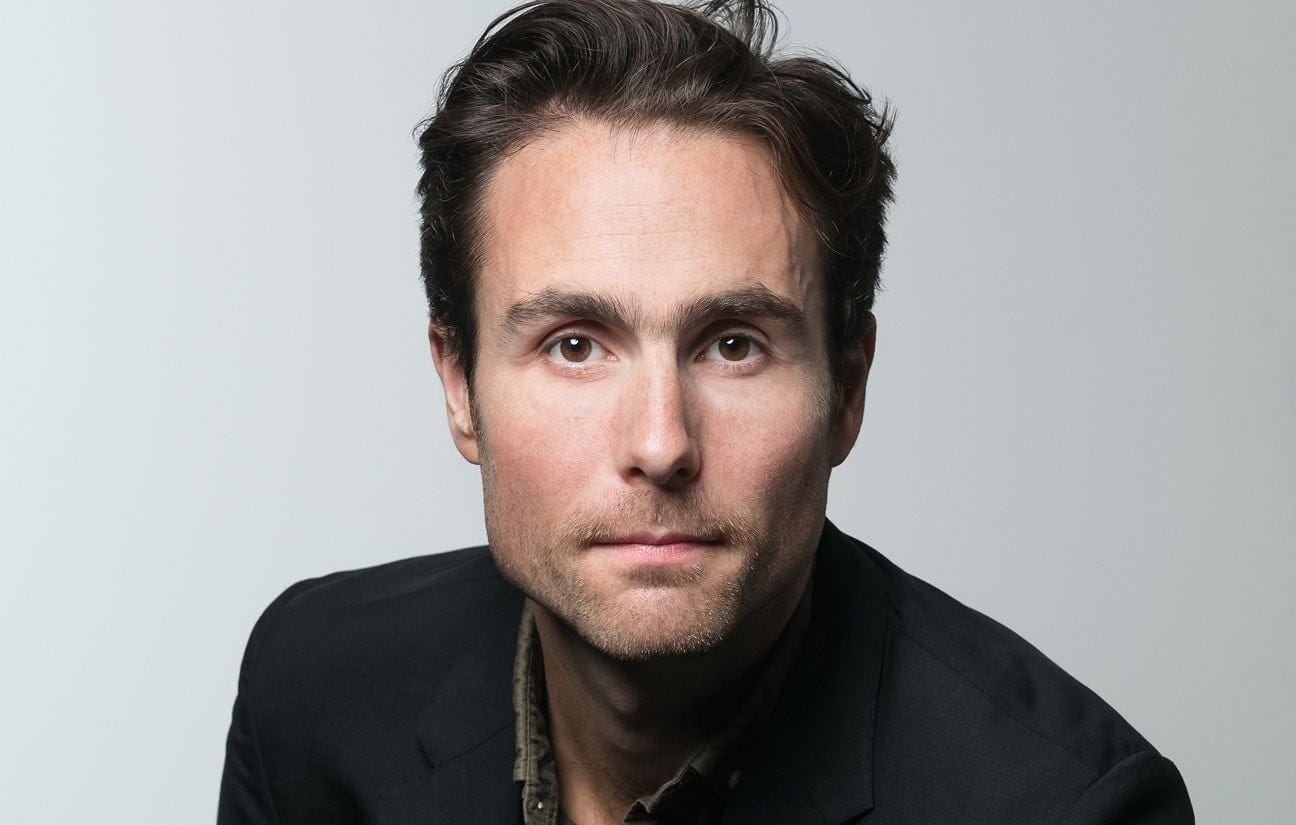
David Wallace-Wells is a columnist and staff writer at the New York Times, where he writes a weekly newsletter on climate change, technology, and the future of the planet. He is the author of the book, The Uninhabitable Earth: Life After Warming. His recent feature in the New York Times Magazine is “AI Populism is Here. And No One is Ready.”
Just over the last six months, there’s been a huge surge in anti-AI and in particular anti-data center organizing and activism in the U.S. And you can see that on the ground where you see huge crowds coming to town halls to protest new data centers that are being proposed. You see some towns that have approved those data centers literally having their entire city council voted out of office as a result. And you see it in these surveys where within the span of just a few months. Huge sentiment flips among the American public from being basically agnostic about AI with some misgivings and some optimism to pretty striking majority opposition to the technology and the infrastructure build out that it requires.
David Wallace-Wells
This (AI) is a technological revolution that has been designed and is being built by an extremely small number of people with very particular idiosyncratic, in certain ways, I think, somewhat sociopathic worldviews.
David Wallace-Wells
News 6/5/26
Our top story this week comes from Congress, where the House has, at long last, successfully pushed through a War Powers Resolution on Iran. As NPR notes “The resolution had originally been set for a vote two weeks ago, but Republican leaders sent House members home early for a May recess when it appeared the largely Democratic-backed measure had enough Republican votes for passage.” However, this did not substantially erode Republican support and the resolution passed by a margin of 215 to 208, with four Republicans, led by Thomas Massie, voting for a cessation of hostilities. The measure now heads to the Senate, where Democrats have been pressing the matter as well but face an uphill battle, and even if it passes through the upper chamber, President Trump is likely to veto the measure if it arrives on his desk. Moreover, House progressives are now pushing a new War Powers Resolution, this one focusing on Lebanon. POLITICO reports Congresswoman Rashida Tlaib forced a vote this Thursday on a resolution calling for the removal of U.S. troops from Lebanon in seven days, despite opposition from the leadership of her own party. The resolution failed by a wide margin, but still garnered a respectable 92 votes, including support from Congressman Massie. Symbolic though they may be, these votes show a growing backlash to Trump’s military adventurism abroad, particularly in the Middle East. With oil prices continuing to rise, this discontent shows no sign of abating.
The main news this week however were the primaires. Tuesday saw a wave of major Democratic primaries across the country. Faiz Shakir, longtime advisor to Bernie Sanders and Executive Director of More Perfect Union, reports that election night was a “clean sweep for Bernie’s endorsements” with five out of five of these candidates set to win the Democratic nomination in their respective races. One race Shakir highlighted was Sam Forstag’s bid for Congress in Montana’s 1st congressional district. Forstag, a firefighter – technically a “smokejumper,” who parachutes into remote areas to extinguish wildfires – earned the endorsements of AOC, Jamie Raskin, Pramila Jayapal and others, as well as many unions, in addition to that of Senator Sanders. Meanwhile in the Montana Senate race, Alani Bankhead has triumphed in the Democratic primary. According to Semafor, “Republicans suspect Bankhead will essentially cede the race to [independent candidate Seth] Bodnar (despite her denials), which would make the general election more competitive.” Bodnar is the former president of the University of Montana and his campaign is backed by former Democratic Senator Jon Tester. One recent poll of a head-to-head match up of Bodnar against Republican nominee Kurt Alme shows the candidates in a dead heat.
In New Jersey, two more Sanders-endorsed candidates have emerged victorious: Analilia Mejia and Dr. Adam Hamawy. Mejia won the special election to replace now-Governor Mikie Sherill in April, beating out former Congressman Tom Malinowksi, the heavy favorite in that race. Mejia is very likely to win this seat again in November, as she already defeated the Republican nominee, Joe Hathaway, in the special election. This from MorristownGreen. Perhaps more surprisingly is the victory of Dr. Adam Hamawy. Now a plastic surgeon, he has distinguished himself for his heroism: saving the life of now-Illinois Senator Tammy Duckworth when her Blackhawk helicopter was shot down in Iraq, serving as a first responder to the 9/11 attacks, and most recently, for his work in Gaza. As the Intercept puts it, “In 2024, [Hamawy]...went to Gaza to provide medical aid to Palestinians wounded by Israeli forces and was temporarily trapped there after Israel closed the Rafah border crossing. When the crossing was reopened, Hamawy was among a small group who refused to leave on demands that more medical workers be let in.” Hamawy’s progressive policy platform includes support for Medicare for All, abolishing ICE, and opposing military aid to Israel. He is almost guaranteed to win this D+13 seat, succeeding Congresswoman Bonnie Watson Coleman.
The candidates Bernie endorsed in California also prevailed, with Randy Villegas poised to win his primary in the state’s 22nd congressional district and Jane Kim winning her race for California Insurance Commissioner, but the results from the state overall are more mixed. As of now, Republican Gubernatorial candidate Steve Hilton leads in the count, with centrist Democrat and former Secretary of Health and Human Services Xavier Becerra in a close second and progressive billionaire Tom Steyer in third. However, as the count continues, Steyer’s margin continues to improve while Hilton’s ebbs away – meaning the runoff could end up being Becerra vs. Steyer, though it is still too early to say. A similar dynamic is unfolding in Los Angeles, where incumbent Mayor Karen Bass is ensured a slot in the general election while her opponents – Councilwoman Nithya Raman to her left and former reality TV star Spencer Pratt to her right – continue to duke it out for the second slot. With California’s notoriously glacial counting pace and the LA Times reporting that millions of ballots remain to be counted, all we can do is watch and wait.
However, up in Minnesota, another Bernie-backed candidate is on the road to victory. On Tuesday, Peggy Flanagan, the Lieutenant Governor seeking the Senate seat being vacated by Amy Klobuchar, overwhelmingly won the endorsement of the Minnesota Democratic-Farmer-Labor Party. Her closest rival, Congresswoman Angie Craig, did not even bother to attend the party convention. While Craig decried the supposed anti-democratic nature of a party convention endorsement, Flanagan posted a video telling Craig “If you can’t show up and face your own party, then you’re not ready to face Republicans,” per the Nation. Flanagan can boast the endorsement of many high-profile progressives in addition to Sanders, such as Senators Elizabeth Warren, Ed Markey, and Minnesota’s own Tina Smith, among many others. If elected, she would be the first ever Native American woman to serve as Governor of an American state.
More much-publicized endorsements came this week from AOC and New York City Mayor Zohran Mamdani, who both endorsed DSA-aligned legislative candidates, but as City and State NY notes, not the same ones. Mamdani gave his blessing to Darializa Avila Chevalier, a DSA-backed candidate running to unseat powerful Rep. Adriano Espaillat who is seeking his sixth term in Congress. Polling shows Avila Chevalier runs ahead of Espaillat when voters learn about her platform, but lags behind due to low name recognition – something the Zohran endorsement is sure to help remedy. Meanwhile AOC issued her endorsement of four DSA candidates for the state legislature. This all suggests that the two titans of the New York City Democratic Socialist movement are coordinating – with Zohran seeking to boost DSA’s prospects without alienating the New York state establishment and vice versa for AOC – but that is nothing more than a hunch.
Looking southward, lame duck Republican Senator John Cornyn this week posted an article on his official Twitter page titled “Libertarian Ted Brown courts disaffected conservative voters in Texas’ U.S. Senate race,” from Houston Public Media. Senator Cornyn’s comment – “Ruh roh” – set off a firestorm of speculation that this was a subtle endorsement of the Libertarian’s campaign and intended to undermine the campaign of his erstwhile opponent and victor of the Republican Senate primary, Ken Paxton. While Cornyn has furiously denied that this is in any way an endorsement of Brown, calling even the “characterization” that he is “promoting” this candidate “fake news,” there is little doubt that posting about Brown from his official account constitutes a promotion of the campaign, albeit not an endorsement. It will be interesting to see whether Cornyn takes other subtle, or not so subtle, digs at Paxton over the course of the campaign, given that he seems to hold a substantial degree of antipathy towards the Texas Attorney General.
Our next two stories come to us from Florida. First, in Florida’s 24th congressional district, the National Journal reports longtime Congresswoman Frederica Wilson will not seek reelection. We recently discussed Congresswoman Wilson on this segment when it was revealed that she had been MIA from the House for weeks following an undisclosed eye surgery. Wilson is 82 years old. The National Journal couches this story in the context of aged members of Congress accepting, or more often refusing, to pass the torch. In its gerontocracy tracker, it highlights members like Doris Matsui, John Garamendi, Jim Clyburn and Maxine Waters, all of whom are 80 years old or older, who are actively seeking reelection this cycle.
Meanwhile, in Florida’s 20th district, the Sunshine State’s redistricting initiative has put the historically Black district in jeopardy. Under the newly drawn lines, the frontrunner in this seat is Congresswoman Debbie Wasserman Schultz and though she claims the Congressional Black Caucus and House Minority Leader Hakeem Jeffries told her that “they know I know our community” the CBC has not endorsed her and Rep. Yvette Clarke, the CBC’s chairwoman, said the caucus did not encourage Wasserman Schultz to run in the district. However, there are currently four Black candidates vying for the seat previously held by Congresswoman Sheila Cherfilus-McCormick, including Cherfilus-McCormick herself as well as progressive challenger Elijah Manley, former Mayor of Broward County Dale Holness and Luther Campbell the former rapper more famously known as Uncle Luke. Now, according to the Miami Herald, all four of these candidates are meeting to “discuss coalescing behind one candidate.” Manley is quoted in this piece saying that while they have not reached an agreement, they “did agree that we needed to consolidate,” and he said the “conversations are going on. They have been very constructive and fruitful.” It is encouraging that in the wake of Callais decision we are beginning to see a more strategic approach to Black political representation, which has been too long monopolized by powerful longtime incumbents intent on nothing so much as preserving their own fiefdoms.
Finally, in a story shocking to exactly no one, Axios is out with a new report showing that the National Guard occupation of Washington D.C. has done little to reduce crime in the District. Per a new study by the centrist Niskansen Center, while the security theater of the deployment seems to have deterred “opportunistic” property crime, violent crime remained on the same downward trajectory it had been on since before the deployment. Moreover, the promised co-benefit – that the presence of the Guard would free up the Metropolitan Police Department to focus on high-crime areas – did not materialize at all. Despite these lackluster results, President Trump plans to double the National Guard presence in Washington – which already costs $1.5 million a day – ahead of the 250th anniversary events this summer. This is an outrageous waste of taxpayer money especially now that we know for sure how little impact this hostile occupation is actually having on driving down violent crime.
This has been Francesco DeSantis, with In Case You Haven’t Heard.


